



- Afhalen na 1 uur in een winkel met voorraad
- In januari gratis thuislevering in België
- Ruim aanbod met 7 miljoen producten
- Afhalen na 1 uur in een winkel met voorraad
- In januari gratis thuislevering in België
- Ruim aanbod met 7 miljoen producten





€ 2,99
+ 2 punten
Omschrijving
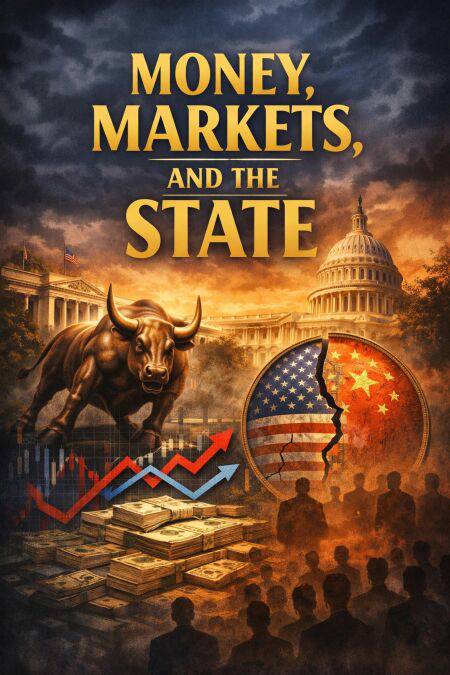
From the first minted coins of ancient Lydia to the digital currencies of the twenty-first century, from the merchant republics of medieval Italy to the financialized global economy of our present moment, Money, Markets, and the State offers a sweeping and penetrating account of the most consequential triangle in the history of human civilization. This ambitious work of political economy traces, across three millennia of monetary history, the enduring and perpetually contested relationship between the power to create money, the dynamics of market exchange, and the authority of the state — arguing, with the full weight of historical evidence, that these three forces are not merely related but mutually constitutive, each shaping and being shaped by the others in ways that determine the distribution of wealth, opportunity, and power in every society that has ever existed.
The book opens by dismantling one of the most persistent myths in economic thought — the myth of barter and the spontaneous origin of money — and establishes, from the clay tablet ledgers of ancient Mesopotamia to the stamped coins of Lydia and Han China, that money has always been, at its deepest foundations, a political instrument as much as an economic one. Sovereignty and currency, debt and finance, trade and institutional innovation are examined through the great civilizations of the ancient and medieval worlds, revealing the degree to which the development of commercial life has depended, at every stage, upon the institutional infrastructure that only political authority could provide.
Moving through the mercantilist empires of early modern Europe, the industrial capitalism of the nineteenth century, and the great monetary crises of the twentieth — the hyperinflation of Weimar Germany, the catastrophe of the Great Depression, the fragile optimism of the Bretton Woods order — the book traces the successive configurations through which the relationship between money, markets, and the state has been organized, contested, and reformed. The Keynesian consensus, the neoliberal revolution, the financialization of the global economy, and the devastating reckoning of the 2008 financial crisis are each examined with analytical precision and historical depth, illuminating both the genuine achievements and the profound failures of the institutional arrangements that shaped the modern world.
The final chapters confront the defining challenges of the present century — the rise of cryptocurrencies and central bank digital currencies, the deepening inequalities generated by financialization, the climate emergency as a monetary and market failure of historic proportions, and the urgent case for more democratic governance of the financial system. Drawing on Modern Monetary Theory, the history of public banking, and the comparative experience of different national models of market governance, the book charts a course toward a new institutional settlement — one adequate to the complexity and urgency of twenty-first century challenges.
Written in richly textured, authoritative prose accessible to the informed general reader as well as the specialist, Money, Markets, and the State is an indispensable guide to the political economy of the world we inhabit — and a compelling argument that the future of that world depends, above all, upon our willingness to recognize that monetary arrangements are always political choices, and to make those choices more wisely, more justly, and more democratically than we have done before.
Specificaties
Betrokkenen
- Auteur(s):
- Uitgeverij:
Inhoud
- Taal:
- Engels
Eigenschappen
- Productcode (EAN):
- 9798233716867
- Verschijningsdatum:
- 14/03/2026
- Uitvoering:
- E-book
- Formaat:
- ePub



Alleen bij Standaard Boekhandel
+ 2 punten op je klantenkaart van Standaard Boekhandel
Cadeau

AANGERADEN


Beoordelingen
We publiceren alleen reviews die voldoen aan de voorwaarden voor reviews. Bekijk onze voorwaarden voor reviews.