



Je cadeautjes zeker op tijd in huis hebben voor de feestdagen? Kom langs in onze winkels en vind het perfecte geschenk!
- Afhalen na 1 uur in een winkel met voorraad
- Gratis thuislevering in België vanaf € 30
- Ruim aanbod met 7 miljoen producten
Je cadeautjes zeker op tijd in huis hebben voor de feestdagen? Kom langs in onze winkels en vind het perfecte geschenk!
- Afhalen na 1 uur in een winkel met voorraad
- Gratis thuislevering in België vanaf € 30
- Ruim aanbod met 7 miljoen producten





€ 167,95
+ 335 punten
Uitvoering
Omschrijving
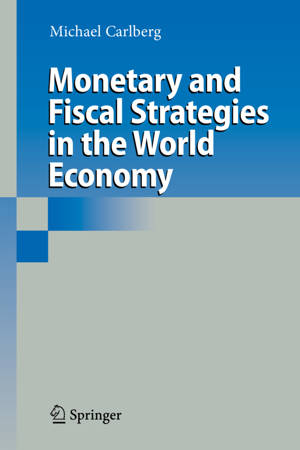
This book studies the strategic interactions between monetary and fiscal policies in the world economy. The world economy consists of two regions, say Europe and America. The policy makers are the central banks and the governments. The policy targets are low inflation, low unemployment, and low structural deficits. There are demand shocks, supply shocks, and mixed shocks. There are regional shocks and common shocks. This book develops a series of basic, intermediate, and more advanced models. Here the focus is on the Nash equilibrium. The key questions are: Given a shock, can policy interactions reduce the existing loss? And to what extent can they do so? Another topical issue is policy cooperation. To illustrate all of this there are a lot of numerical examples. The present book is part of a larger research project on European Monetary Union, see the references given at the back of the book. Some parts of this project were presented at the World Congress of the International Economic Association, at the International Conference on Macroeconomic Analysis, at the International Institute of Public Finance, and at the International Atlantic Economic Conference. Other parts were presented at the Macro Study Group of the German Economic Association, at the Annual Meeting of the Austrian Economic Association, at the Göttingen Workshop on International Economics, at the Halle Workshop on Monetary Economics, at the Research Seminar on Macroeconomics in Freiburg, at the Research Seminar on Economics in Kassel, and at the Passau Workshop on International Economics.
Specificaties
Betrokkenen
- Auteur(s):
- Uitgeverij:
Inhoud
- Aantal bladzijden:
- 306
- Taal:
- Engels
Eigenschappen
- Productcode (EAN):
- 9783642424038
- Verschijningsdatum:
- 31/10/2014
- Uitvoering:
- Paperback
- Formaat:
- Trade paperback (VS)
- Afmetingen:
- 156 mm x 234 mm
- Gewicht:
- 449 g


Alleen bij Standaard Boekhandel
+ 335 punten op je klantenkaart van Standaard Boekhandel
CADEAU


Beoordelingen
We publiceren alleen reviews die voldoen aan de voorwaarden voor reviews. Bekijk onze voorwaarden voor reviews.