


- Afhalen na 1 uur in een winkel met voorraad
- Gratis thuislevering in België vanaf € 30
- Ruim aanbod met 7 miljoen producten
- Afhalen na 1 uur in een winkel met voorraad
- Gratis thuislevering in België vanaf € 30
- Ruim aanbod met 7 miljoen producten





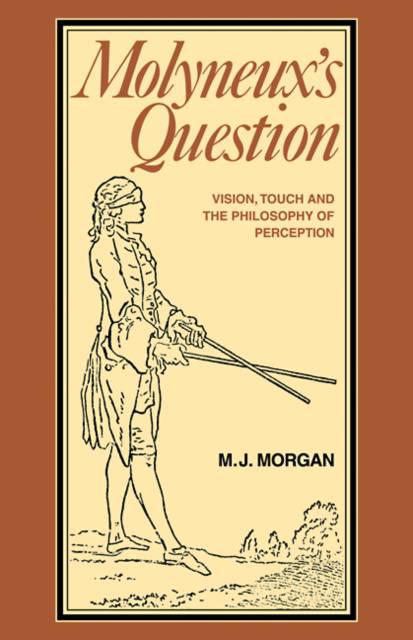
Molyneux's Question
Vision, Touch and the Philosophy of Perception
Michael J Morgan
Paperback | Engels
€ 67,95
+ 135 punten
Omschrijving
If a man born blind were to gain his sight in later life would he be able to identify the objects he saw around him? Would he recognise a cube and a globe on the basis of his earlier tactile experiences alone? This was William Molyneux's famous question to John Locke and it was much discussed by English and French empiricists in the eighteenth century as part of the controversy over innatism and abstract ideas. Dr Morgan examines the whole history of this debate: Locke's own (negative) answer to the question, the contributions of Berkeley, Condillac, Diderot and Voltaire and the factual accounts of early cataract operations and modern laboratory studies. He shows how this debate is involved in the development and eventual separation of philosophy and experimental psychology after the eighteenth century and considers why the original question is effectively still unanswered. This is one problem-area with its intricate cluster of connected conceptual and technical difficulties which suggests the need for some reunion or at least collaboration between the two subjects.
Specificaties
Betrokkenen
- Auteur(s):
- Uitgeverij:
Inhoud
- Aantal bladzijden:
- 228
- Taal:
- Engels
Eigenschappen
- Productcode (EAN):
- 9780521100670
- Verschijningsdatum:
- 29/01/2009
- Uitvoering:
- Paperback
- Formaat:
- Trade paperback (VS)
- Afmetingen:
- 140 mm x 216 mm
- Gewicht:
- 294 g


Alleen bij Standaard Boekhandel
+ 135 punten op je klantenkaart van Standaard Boekhandel
Cadeau

AANGERADEN


Beoordelingen
We publiceren alleen reviews die voldoen aan de voorwaarden voor reviews. Bekijk onze voorwaarden voor reviews.