


- Afhalen na 1 uur in een winkel met voorraad
- Gratis thuislevering in België vanaf € 30
- Ruim aanbod met 7 miljoen producten
- Afhalen na 1 uur in een winkel met voorraad
- Gratis thuislevering in België vanaf € 30
- Ruim aanbod met 7 miljoen producten





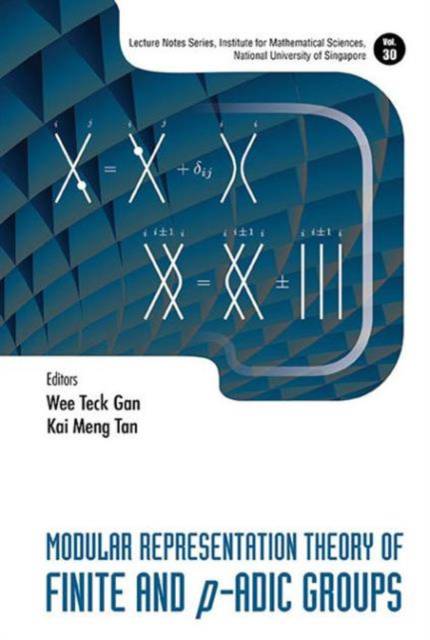
Modular Representation Theory of Finite and P-Adic Groups
Gan Wee Teck
Hardcover | Engels | Lecture Notes Series, Institute for Mathematical Sciences, National University of Singapore | nr. 30
€ 161,95
Omschrijving
This volume is an outgrowth of the program Modular Representation Theory of Finite and p-Adic Groups held at the Institute for Mathematical Sciences at National University of Singapore during the period of 1-26 April 2013. It contains research works in the areas of modular representation theory of p-adic groups and finite groups and their related algebras. The aim of this volume is to provide a bridge -- where interactions are rare between researchers from these two areas -- by highlighting the latest developments, suggesting potential new research problems, and promoting new collaborations.
It is perhaps one of the few volumes, if not only, which treats such a juxtaposition of diverse topics, emphasizing their common core at the heart of Lie theory.
Specificaties
Betrokkenen
- Auteur(s):
- Uitgeverij:
Inhoud
- Aantal bladzijden:
- 276
- Taal:
- Engels
- Reeks:
- Reeksnummer:
- nr. 30
Eigenschappen
- Productcode (EAN):
- 9789814651806
- Verschijningsdatum:
- 23/02/2015
- Uitvoering:
- Hardcover
- Formaat:
- Genaaid
- Afmetingen:
- 150 mm x 232 mm
- Gewicht:
- 526 g


Alleen bij Standaard Boekhandel
Cadeau

AANGERADEN


Beoordelingen
We publiceren alleen reviews die voldoen aan de voorwaarden voor reviews. Bekijk onze voorwaarden voor reviews.