


- Afhalen na 1 uur in een winkel met voorraad
- Gratis thuislevering in België vanaf € 30
- Ruim aanbod met 7 miljoen producten
- Afhalen na 1 uur in een winkel met voorraad
- Gratis thuislevering in België vanaf € 30
- Ruim aanbod met 7 miljoen producten





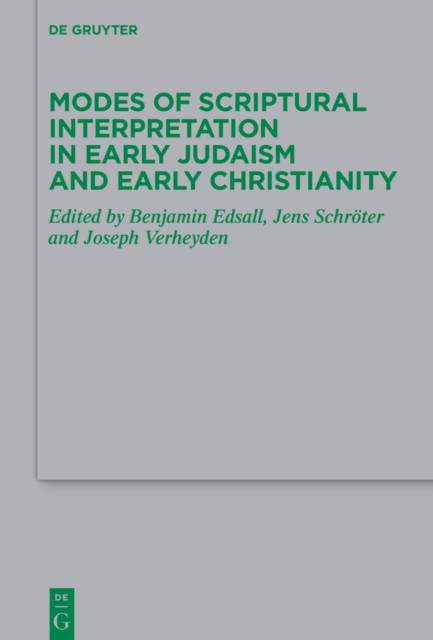
Modes of Scriptural Interpretation in Early Judaism and Early Christianity
€ 112,95
+ 225 punten
Omschrijving
The present contributions examine three modes of interpretation--rewriting, appropriation, and commentary--within early Jewish and Christian texts. As is well known, scriptural interpretation was important, even central, for the process of identity formation in early Jewish and Christian communities. The modes of scriptural interpretation covered in the present volume not only betray deep commonalities in their approach and discursive field, but also illuminate the practical side of interpretation to which communal and/or polemical application is intrinsic. These different modes co-exist, operating side by side across the early period, rather than conforming to any clear developmental scheme. In the end, the category of interpretation itself turns out to be capatious, including material from sectarian Halakhah to Valentinian mythology to Rabbinic heresiological discourse. Further, contributors note that in a myriad of ways we remain the heirs of the interpretive projects explored here. Attending to the reception of scriptural texts in their ancient interpretation offers the opportunity for scholars to highlight their possibilities, promises and difficulties, opening them for others with ears to hear.
Specificaties
Betrokkenen
- Uitgeverij:
Inhoud
- Aantal bladzijden:
- 269
- Taal:
- Engels
- Reeks:
- Reeksnummer:
- nr. 265
Eigenschappen
- Productcode (EAN):
- 9783111329253
- Verschijningsdatum:
- 2/02/2026
- Uitvoering:
- Hardcover
- Formaat:
- Genaaid
- Afmetingen:
- 156 mm x 234 mm
- Gewicht:
- 557 g


Alleen bij Standaard Boekhandel
+ 225 punten op je klantenkaart van Standaard Boekhandel
Cadeau

AANGERADEN


Beoordelingen
We publiceren alleen reviews die voldoen aan de voorwaarden voor reviews. Bekijk onze voorwaarden voor reviews.