


- Afhalen na 1 uur in een winkel met voorraad
- Gratis thuislevering in België vanaf € 30
- Ruim aanbod met 7 miljoen producten
- Afhalen na 1 uur in een winkel met voorraad
- Gratis thuislevering in België vanaf € 30
- Ruim aanbod met 7 miljoen producten





€ 140,95
+ 281 punten
Uitvoering
Omschrijving
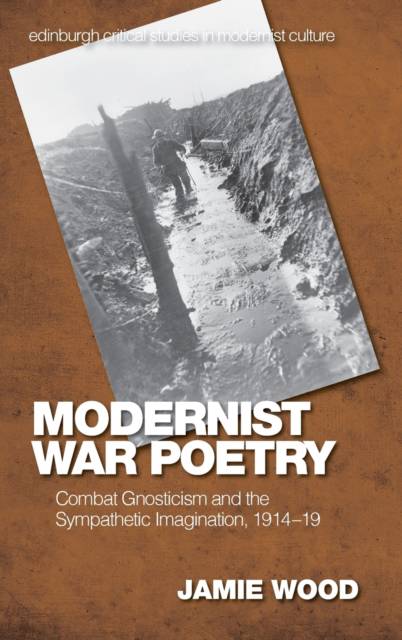
This study examines the work of the principle architects of Anglo-American modernist poetics - T.S. Eliot, H.D., Ezra Pound, Gertrude Stein, Edward Thomas and Wallace Stevens - and their response to the challenge of combatant war poetries. It argues that these civilian poets sought to negotiate directly with the combatant's gnosticism, specifically with the combatant's assertion that only those present at a catastrophe could properly represent its horrors. The modernists rightly identified that gnosticism was a threat to their own representational claims on an increasingly traumatic modernity. How was the imagination to be salvaged in order that it could still feel into the wounded experience of others? In response to this challenge, the modernists drafted their own imagined war poems, developing in the process several different and contradictory poetic systems. Whereas scholarship ordinarily tells the story of intra-war modern poetry as a series of different schools - the trench lyric, the home front elegy and the modernist long poem - each moving in a different direction, this study brings those traditions back together into one history by treating them as idiosyncratic responses to the same aesthetic problem.
Specificaties
Betrokkenen
- Auteur(s):
- Uitgeverij:
Inhoud
- Aantal bladzijden:
- 272
- Taal:
- Engels
- Reeks:
Eigenschappen
- Productcode (EAN):
- 9781474497749
- Verschijningsdatum:
- 10/01/2023
- Uitvoering:
- Hardcover
- Formaat:
- Genaaid
- Afmetingen:
- 156 mm x 234 mm
- Gewicht:
- 566 g



Alleen bij Standaard Boekhandel
+ 281 punten op je klantenkaart van Standaard Boekhandel
Cadeau

AANGERADEN


Beoordelingen
We publiceren alleen reviews die voldoen aan de voorwaarden voor reviews. Bekijk onze voorwaarden voor reviews.