


- Afhalen na 1 uur in een winkel met voorraad
- Gratis thuislevering in België vanaf € 30
- Ruim aanbod met 7 miljoen producten
- Afhalen na 1 uur in een winkel met voorraad
- Gratis thuislevering in België vanaf € 30
- Ruim aanbod met 7 miljoen producten





€ 45,95
+ 91 punten
Omschrijving
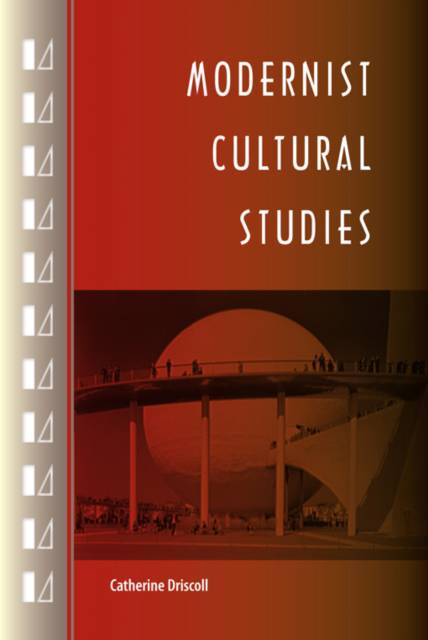
"A timely reassessment of the fraught relationship cultural studies has had with the term 'modernism' amounting to a reevaluation of the place that both can occupy in discussions of cultural modernity, resting on a commonality or refrain of innovation, relativity, contingency, critique, and a pluralistic disciplinary methodology."--Peter Childs, University of Gloucestershire For many scholars, cultural studies is viewed as a product of postmodern criticism and as the antithesis of modernism. In this brilliant work, Catherine Driscoll argues persuasively that we must view what we call cultural studies as a direct continuation of the innovations and concerns of modernism and the modernists. In making her case, Driscoll provides a fresh take on arguments--some seemingly unresolvable--that pivot on modernism's desire for novelty. Defining modernity as a critical attitude rather than a time period, she describes the many things these ostensibly different fields of inquiry have in common and reveals why cultural studies must be viewed as a fundamentally modernist project. Casting a wide net across the shared interests of modernism and cultural studies, including cinema, fiction, fashion, art, and popular music, Driscoll explores such themes as love and work, adolescence and everyday life, the significance of the everyday, the popular as a field of power, and the importance of representation to identity and experience in modernity. Catherine Driscoll is chair of gender and cultural studies at the University of Sydney.
Specificaties
Betrokkenen
- Auteur(s):
- Uitgeverij:
Inhoud
- Aantal bladzijden:
- 292
- Taal:
- Engels
Eigenschappen
- Productcode (EAN):
- 9780813041704
- Verschijningsdatum:
- 16/03/2012
- Uitvoering:
- Paperback
- Formaat:
- Trade paperback (VS)
- Afmetingen:
- 152 mm x 229 mm
- Gewicht:
- 435 g


Alleen bij Standaard Boekhandel
+ 91 punten op je klantenkaart van Standaard Boekhandel
Cadeau

AANGERADEN


Beoordelingen
We publiceren alleen reviews die voldoen aan de voorwaarden voor reviews. Bekijk onze voorwaarden voor reviews.