


- Afhalen na 1 uur in een winkel met voorraad
- Gratis thuislevering in België vanaf € 30
- Ruim aanbod met 7 miljoen producten
- Afhalen na 1 uur in een winkel met voorraad
- Gratis thuislevering in België vanaf € 30
- Ruim aanbod met 7 miljoen producten





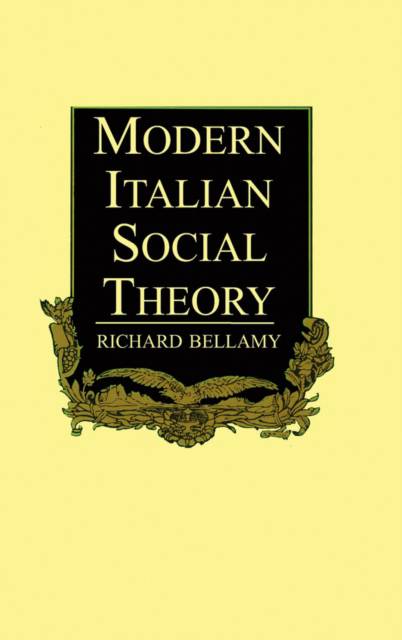
Modern Italian Social Theory
Ideology and Politics from Pareto to the Present
Richard Bellamy
Paperback | Engels
€ 39,95
+ 79 punten
Omschrijving
This text provides a clear and systematic introduction to the development of social and political theory in modern Italy. It gives particular attention to relating the main traditions of Italian thought to the history of the country since unification. The work concentrates on six major thinkers, examining how their theoretical ideas influenced their analysis of political behaviour. The thinkers concerned are Pareto, Mosca, Labriola, Croce, Gentile and Gramsci. In discussing the respective theories of each author, the book situates them within the intellectual and social contexts to which they were addressed. The concluding chapter focuses on the recent debates between Bobbio, della Volpe and others about the validity of the Italian road to socialism and its compatibility with the liberal values and institutions of Western democracies.
Specificaties
Betrokkenen
- Auteur(s):
- Uitgeverij:
Inhoud
- Aantal bladzijden:
- 224
- Taal:
- Engels
Eigenschappen
- Productcode (EAN):
- 9780745606170
- Verschijningsdatum:
- 8/01/1991
- Uitvoering:
- Paperback
- Formaat:
- Trade paperback (VS)
- Afmetingen:
- 152 mm x 229 mm
- Gewicht:
- 303 g


Alleen bij Standaard Boekhandel
+ 79 punten op je klantenkaart van Standaard Boekhandel
Cadeau

AANGERADEN


Beoordelingen
We publiceren alleen reviews die voldoen aan de voorwaarden voor reviews. Bekijk onze voorwaarden voor reviews.