


- Afhalen na 1 uur in een winkel met voorraad
- Gratis thuislevering in België vanaf € 30
- Ruim aanbod met 7 miljoen producten
- Afhalen na 1 uur in een winkel met voorraad
- Gratis thuislevering in België vanaf € 30
- Ruim aanbod met 7 miljoen producten





€ 6,99
+ 6 punten
Uitvoering
Omschrijving
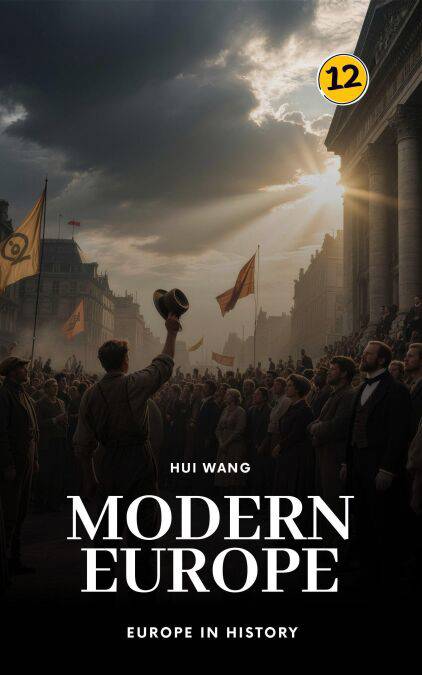
Modern Europe: Europe in History, PART TWO, is my attempt to trace one of the most dramatic transformations in political history — the long, turbulent arc by which Europe moved from revolutions and empires toward systems of representation and the idea of universal suffrage. The story opens amid the chaos of the French Revolution: from the fall of Maximilien Robespierre in the Thermidorian Reaction of 1794 to the eventual collapse of the Directory in 1799 — moments when France teetered on the edge of profound uncertainty. Out of that turmoil rose a Corsican-born officer, Napoleon Bonaparte, whose rapid ascent would redraw borders, reorder governments, and cast a shadow that still informs modern political life.
I trace Napoleon's path from ambitious general to ruler of France — his seizure of power in 1799, his coronation as Emperor at Notre-Dame in 1804, and the unstable world that followed his defeat and exile. The restoration of the Bourbon monarchy in 1814–1815, the political experiment of Louis-Philippe as "King of the French" (1830–1848), and the vigorous debates ignited by thinkers such as Emmanuel-Joseph Sieyès — author of What Is the Third Estate? and a key figure in the 1799 coup — all reveal a continent wrestling with one central question: who should have the right to vote, and who should hold political power?
The nineteenth century arrived with fresh convulsions. The fall of the July Monarchy and the revolutionary shock of 1848 exposed the brittle seams of European politics, and the dramatic rise of Louis‑Napoléon Bonaparte drove the point home: elected president of the French Republic in 1848, he seized power in the Coup of 1851 and, by 1852, had remade himself as Napoleon III. These upheavals were not just power struggles; they were the surface tremors of deeper intellectual currents reaching back to thinkers such as Aristotle—whose reflections on polity and citizenship, forged in 384–322 BCE, still cast long shadows over modern debates about authority and liberty.
The narrative then shifts to Britain, where change followed a different, more incremental script. From the reign of Henry VIII through the Glorious Revolution, and amid the long rivalry of Whigs and Tories and the steady political framework of the Hanoverian age, Britain slowly stitched together institutions that altered the mechanics of representation and parliamentary power. The landmark Reform Act 1832 (passed in 1832) cracked open the old order and ushered in a new political era—one that would, over decades, broaden participation and gradually redefine the relationship between government and society.
By the time the story reaches "The Rise of Universal Suffrage and the Long Transition From Kings to the People," the sweeping transformation of European politics is unmistakable. This book stitches together revolutions, rulers, thinkers, and mass movements to trace how the institutions we call modern democracy were hammered out through centuries of conflict, compromise, and intellectual struggle.
Specificaties
Betrokkenen
- Auteur(s):
- Uitgeverij:
Inhoud
- Taal:
- Engels
- Reeks:
Eigenschappen
- Productcode (EAN):
- 9789190150344
- Verschijningsdatum:
- 2/03/2026
- Uitvoering:
- E-book
- Formaat:
- ePub


Alleen bij Standaard Boekhandel
+ 6 punten op je klantenkaart van Standaard Boekhandel
Cadeau

AANGERADEN


Beoordelingen
We publiceren alleen reviews die voldoen aan de voorwaarden voor reviews. Bekijk onze voorwaarden voor reviews.