


- Afhalen na 1 uur in een winkel met voorraad
- Gratis thuislevering in België vanaf € 30
- Ruim aanbod met 7 miljoen producten
- Afhalen na 1 uur in een winkel met voorraad
- Gratis thuislevering in België vanaf € 30
- Ruim aanbod met 7 miljoen producten




€ 131,99
+ 263 punten
Omschrijving
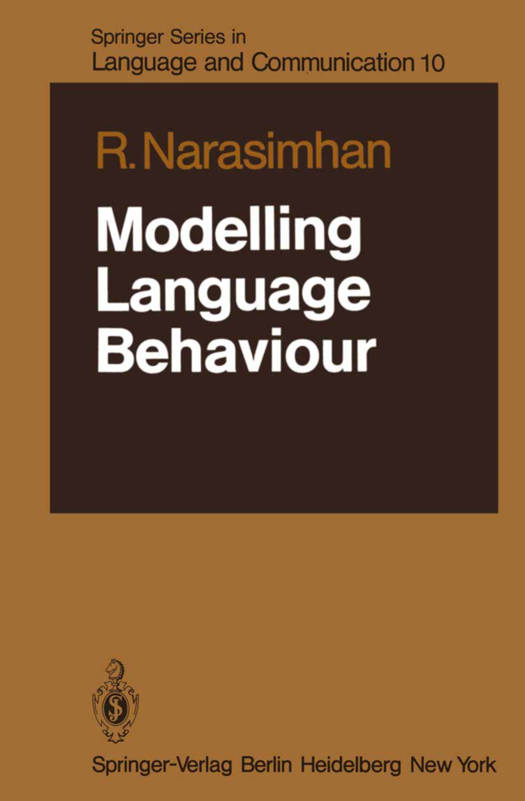
This book studies language behaviour in the larger context of modelling or- ganismic behaviour more generally. It starts out from the basic premise that what is characteristic of organismic behaviour is that an organism uses its behavioural acts to accomplish something in its interactions with the world in which it finds itself. These two features, that an organism has a behav- ioural repertoire and that it deploys specific behavioural acts from its repertoire in an intentional way, define the agentive nature of an organism. The study of organismic behaviour, then, must primarily concern itself with this agentive aspect of an organism and determine what structures and proces- ses underlie these intentional organismic acts. We should be able to say what primitive structures and what primitive processes put together in what ways can give rise to the kinds of behavioural acts an organism engages in. Any explanation of behaviour that we formulate in terms of underlying structures and processes must be testable and must be consonant with the observed pheno- menological aspects of such behaviour.
Specificaties
Betrokkenen
- Auteur(s):
- Uitgeverij:
Inhoud
- Aantal bladzijden:
- 220
- Taal:
- Engels
- Reeks:
- Reeksnummer:
- nr. 10
Eigenschappen
- Productcode (EAN):
- 9783642679360
- Verschijningsdatum:
- 7/12/2011
- Uitvoering:
- Paperback
- Formaat:
- Trade paperback (VS)
- Afmetingen:
- 156 mm x 234 mm
- Gewicht:
- 340 g


Alleen bij Standaard Boekhandel
+ 263 punten op je klantenkaart van Standaard Boekhandel
Wedstrijd


Beoordelingen
We publiceren alleen reviews die voldoen aan de voorwaarden voor reviews. Bekijk onze voorwaarden voor reviews.