


- Afhalen na 1 uur in een winkel met voorraad
- Gratis thuislevering in België vanaf € 30
- Ruim aanbod met 7 miljoen producten
- Afhalen na 1 uur in een winkel met voorraad
- Gratis thuislevering in België vanaf € 30
- Ruim aanbod met 7 miljoen producten





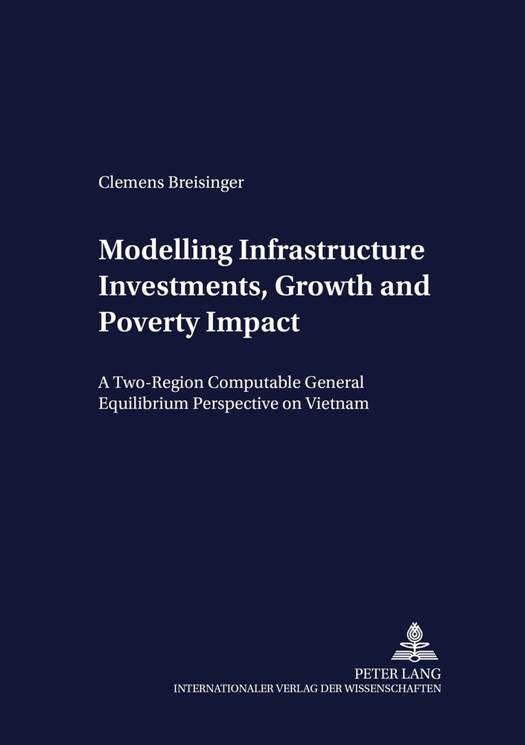
Modelling Infrastructure Investments, Growth and Poverty Impact
A Two-Region Computable General Equilibrium Perspective on Vietnam
Clemens Breisinger
€ 77,95
+ 155 punten
Omschrijving
Evaluation pro-poor growth enhancing investments in infrastructure and rural development requires comprehensive appraisal tools. Traditional methods have taken a project or sector perspective that did not capture economy-wide effects. However, in addition to inter-sectoral effects, large-scale investments can also have long-term impacts on national capital formation, the government budget and the foreign trade balance. This study builds a computable general equilibrium model and links it to a micro-accounting module for poverty analysis in Vietnam. The spatial dimension is captured by incorporating two regions into the model: the lagging mountainous province of Son La is compared to the rest of Vietnam. This model is applied to several infrastructure investments and identifies economic growth rates that would be needed to achieve the first Millennium Development Goal.
Specificaties
Betrokkenen
- Auteur(s):
- Uitgeverij:
Inhoud
- Aantal bladzijden:
- 174
- Taal:
- Engels
- Reeks:
- Reeksnummer:
- nr. 56
Eigenschappen
- Productcode (EAN):
- 9783631555576
- Verschijningsdatum:
- 4/08/2006
- Uitvoering:
- Paperback
- Formaat:
- Trade paperback (VS)
- Afmetingen:
- 148 mm x 210 mm
- Gewicht:
- 279 g


Alleen bij Standaard Boekhandel
+ 155 punten op je klantenkaart van Standaard Boekhandel
Cadeau

AANGERADEN


Beoordelingen
We publiceren alleen reviews die voldoen aan de voorwaarden voor reviews. Bekijk onze voorwaarden voor reviews.