



- Afhalen na 1 uur in een winkel met voorraad
- In januari gratis thuislevering in België
- Ruim aanbod met 7 miljoen producten
- Afhalen na 1 uur in een winkel met voorraad
- In januari gratis thuislevering in België
- Ruim aanbod met 7 miljoen producten





€ 151,95
+ 303 punten
Omschrijving
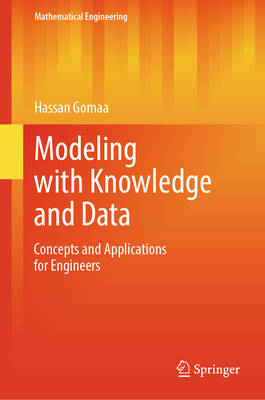
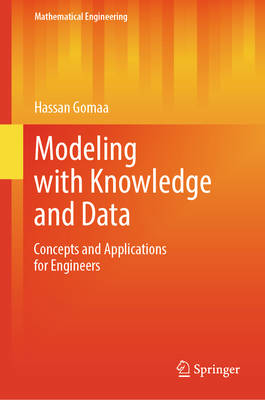
This book explores how physical laws and data can be combined to model complex systems in fluid mechanics, heat transfer, multiphase flows and turbomachinery. First principles provide a strong foundation, yet they are often not sufficient on their own when dealing with real systems. The text builds from physics toward data driven approaches and presents the full spectrum of hybrid modeling. It moves from white box models rooted in conservation laws to grey box and black box models shaped by empirical data and machine learning. The fundamentals of physical modeling are introduced through dimensional analysis, governing equations and simplified flow regimes. From a data centered perspective the book presents methods for uncertainty quantification, statistical inference and machine learning aimed at model calibration and prediction. Examples range from canonical flows studied in controlled settings to complex industrial systems operating under real conditions. These cases illustrate how hybrid models can combine interpretability with predictive strength. The discussion highlights the importance of a clear modeling purpose, an appropriate model structure and the role of context in giving meaning to data. Context is described in physical, operational and diagnostic terms and is presented as a key ingredient for constructing useful models.
Specificaties
Betrokkenen
- Auteur(s):
- Uitgeverij:
Inhoud
- Aantal bladzijden:
- 404
- Taal:
- Engels
- Reeks:
Eigenschappen
- Productcode (EAN):
- 9783658506780
- Verschijningsdatum:
- 29/06/2026
- Uitvoering:
- Hardcover
- Formaat:
- Genaaid
- Afmetingen:
- 155 mm x 235 mm


Alleen bij Standaard Boekhandel
+ 303 punten op je klantenkaart van Standaard Boekhandel
Cadeau

AANGERADEN


Beoordelingen
We publiceren alleen reviews die voldoen aan de voorwaarden voor reviews. Bekijk onze voorwaarden voor reviews.