



Je cadeautjes zeker op tijd in huis hebben voor de feestdagen? Kom langs in onze winkels en vind het perfecte geschenk!
- Afhalen na 1 uur in een winkel met voorraad
- Gratis thuislevering in België vanaf € 30
- Ruim aanbod met 7 miljoen producten
Je cadeautjes zeker op tijd in huis hebben voor de feestdagen? Kom langs in onze winkels en vind het perfecte geschenk!
- Afhalen na 1 uur in een winkel met voorraad
- Gratis thuislevering in België vanaf € 30
- Ruim aanbod met 7 miljoen producten





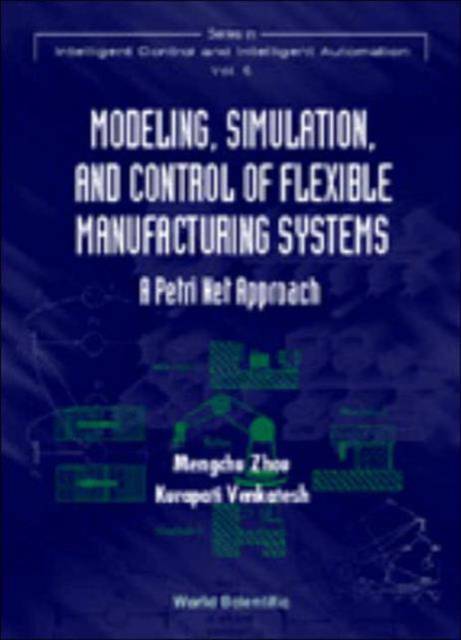
Modeling, Simulation, and Control of Flexible Manufacturing Systems: A Petri Net Approach
Kurapati Venkatesh, Mengchu Zhou
€ 181,95
+ 363 punten
Omschrijving
One critical barrier leading to successful implementation of flexible manufacturing and related automated systems is the ever-increasing complexity of their modeling, analysis, simulation, and control. Research and development over the last three decades has provided new theory and graphical tools based on Petri nets and related concepts for the design of such systems. The purpose of this book is to introduce a set of Petri-net-based tools and methods to address a variety of problems associated with the design and implementation of flexible manufacturing systems (FMSs), with several implementation examples.There are three ways this book will directly benefit readers. First, the book will allow engineers and managers who are responsible for the design and implementation of modern manufacturing systems to evaluate Petri nets for applications in their work. Second, it will provide sufficient breadth and depth to allow development of Petri-net-based industrial applications. Third, it will allow the basic Petri net material to be taught to industrial practitioners, students, and academic researchers much more efficiently. This will foster further research and applications of Petri nets in aiding the successful implementation of advanced manufacturing systems.
Specificaties
Betrokkenen
- Auteur(s):
- Uitgeverij:
Inhoud
- Aantal bladzijden:
- 428
- Taal:
- Engels
- Reeks:
- Reeksnummer:
- nr. 6
Eigenschappen
- Productcode (EAN):
- 9789810230296
- Verschijningsdatum:
- 2/02/1999
- Uitvoering:
- Hardcover
- Formaat:
- Genaaid
- Afmetingen:
- 163 mm x 225 mm
- Gewicht:
- 716 g



Alleen bij Standaard Boekhandel
+ 363 punten op je klantenkaart van Standaard Boekhandel
CADEAU


Beoordelingen
We publiceren alleen reviews die voldoen aan de voorwaarden voor reviews. Bekijk onze voorwaarden voor reviews.