


- Afhalen na 1 uur in een winkel met voorraad
- Gratis thuislevering in België vanaf € 30
- Ruim aanbod met 7 miljoen producten
- Afhalen na 1 uur in een winkel met voorraad
- Gratis thuislevering in België vanaf € 30
- Ruim aanbod met 7 miljoen producten





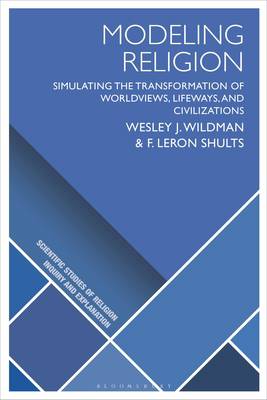
Modeling Religion
Simulating the Transformation of Worldviews, Lifeways, and Civilizations
Wesley J Wildman, F Leron Shults
€ 67,95
+ 135 punten
Eenvoudig bestellen
Veilig betalen


Gratis thuislevering vanaf € 30 (via bpost)
Gratis levering in je Standaard Boekhandel
Omschrijving
What role has religion played in the major civilizational transformations associated with the Neolithic Revolution, the Axial Age, and Modernity? This book introduces new methodological tools and material insights for guiding conversations about these debates.
The authors introduce a new branch of computational humanities, using computational modeling to simulate civilizational transformations. They integrate multiple theories across many disciplines, including the scientific study of religion, and evaluate the relative importance of those causal theories in processes of civilizational change. Materially, the book sheds new light on major debates among historians, archaeologists, and other social theorists on the role of religion within these major transitions. The book tackles the urgent question of what sort of civilizational transformations might be possible in a world where the influence and significance of religion continues to decline wherever technology, education, freedom, and cultural pluralism are most advanced.Specificaties
Betrokkenen
- Auteur(s):
- Uitgeverij:
Inhoud
- Aantal bladzijden:
- 256
- Taal:
- Engels
- Reeks:
Eigenschappen
- Productcode (EAN):
- 9781350367340
- Verschijningsdatum:
- 22/01/2026
- Uitvoering:
- Paperback
- Formaat:
- Trade paperback (VS)
- Afmetingen:
- 156 mm x 234 mm
- Gewicht:
- 367 g


Alleen bij Standaard Boekhandel
+ 135 punten op je klantenkaart van Standaard Boekhandel
CADEAU

AANGERADEN


Beoordelingen
We publiceren alleen reviews die voldoen aan de voorwaarden voor reviews. Bekijk onze voorwaarden voor reviews.