


- Afhalen na 1 uur in een winkel met voorraad
- Gratis thuislevering in België vanaf € 30
- Ruim aanbod met 7 miljoen producten
- Afhalen na 1 uur in een winkel met voorraad
- Gratis thuislevering in België vanaf € 30
- Ruim aanbod met 7 miljoen producten





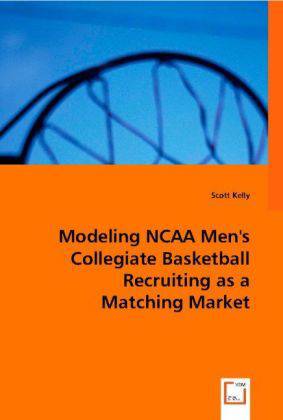
Modeling NCAA Men's Collegiate Basketball Recruiting as a Matching Market
Scott Kelly
Paperback | Engels
€ 58,45
+ 116 punten
Omschrijving
Among its varied functions, the NCAA oversees a ?matching market? in which prospective student-athletes are paired with colleges and universities for the purpose of competing in intercollegiate athletics. Previous economic research has suggested that a number of difficulties can arise in decentralized matching markets. There is a tendency for matches to occur inefficiently early in the process. Because of this, participants in some markets have instituted centralized matching procedures. In these centralized procedures, participants submit preferences to a computerized algorithm that produces stable matches based on submitted preferences. In this work the current NCAA matching procedure is described, assessed, and compared to centralized matching procedures that have been successful in improving economic performance in similar markets. Experimental methods and survey data are employed in the analysis. Results of the experiments permit a comparison of the efficiency and stability of the procedures. A survey was administered to supplement the evidence provided by laboratory experiments.
Specificaties
Betrokkenen
- Auteur(s):
- Uitgeverij:
Inhoud
- Aantal bladzijden:
- 144
- Taal:
- Engels
Eigenschappen
- Productcode (EAN):
- 9783639003246
- Uitvoering:
- Paperback
- Afmetingen:
- 150 mm x 220 mm
- Gewicht:
- 204 g


Alleen bij Standaard Boekhandel
+ 116 punten op je klantenkaart van Standaard Boekhandel

Beoordelingen
We publiceren alleen reviews die voldoen aan de voorwaarden voor reviews. Bekijk onze voorwaarden voor reviews.