


- Afhalen na 1 uur in een winkel met voorraad
- Gratis thuislevering in België vanaf € 30
- Ruim aanbod met 7 miljoen producten
- Afhalen na 1 uur in een winkel met voorraad
- Gratis thuislevering in België vanaf € 30
- Ruim aanbod met 7 miljoen producten





€ 245,45
+ 490 punten
Uitvoering
Omschrijving
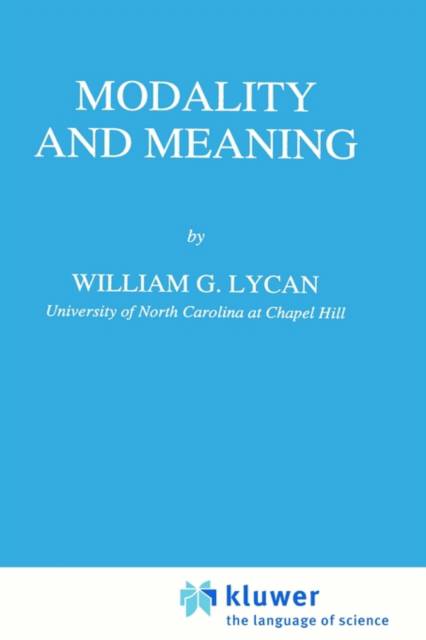
Part I of this book presents a theory of modal metaphysics in the possible-worlds tradition. `Worlds' themselves are understood as structured sets of properties; this `Ersatzist' view is defended against its most vigorous competitors, Meinongianism and David Lewis' theory of existent concrete worlds. Related issues of essentialism and linguistic reference are explored.
Part II takes up the question of lexical meaning in the context of possible-world semantics. There are skeptical analyses of analyticity and the notion of a logical constant; and an `infinite polysemy' thesis is defended.
The book will be of particular interest to metaphysicians, possible-world semanticists, philosophers of language, and linguists concerned with lexical semantics.
Part II takes up the question of lexical meaning in the context of possible-world semantics. There are skeptical analyses of analyticity and the notion of a logical constant; and an `infinite polysemy' thesis is defended.
The book will be of particular interest to metaphysicians, possible-world semanticists, philosophers of language, and linguists concerned with lexical semantics.
Specificaties
Betrokkenen
- Auteur(s):
- Uitgeverij:
Inhoud
- Aantal bladzijden:
- 338
- Taal:
- Engels
- Reeks:
- Reeksnummer:
- nr. 53
Eigenschappen
- Productcode (EAN):
- 9780792330066
- Verschijningsdatum:
- 31/08/1994
- Uitvoering:
- Hardcover
- Formaat:
- Genaaid
- Afmetingen:
- 164 mm x 242 mm
- Gewicht:
- 712 g


Alleen bij Standaard Boekhandel
+ 490 punten op je klantenkaart van Standaard Boekhandel
Cadeau

AANGERADEN


Beoordelingen
We publiceren alleen reviews die voldoen aan de voorwaarden voor reviews. Bekijk onze voorwaarden voor reviews.