


- Afhalen na 1 uur in een winkel met voorraad
- Gratis thuislevering in België vanaf € 30
- Ruim aanbod met 7 miljoen producten
- Afhalen na 1 uur in een winkel met voorraad
- Gratis thuislevering in België vanaf € 30
- Ruim aanbod met 7 miljoen producten





€ 201,95
+ 403 punten
Omschrijving
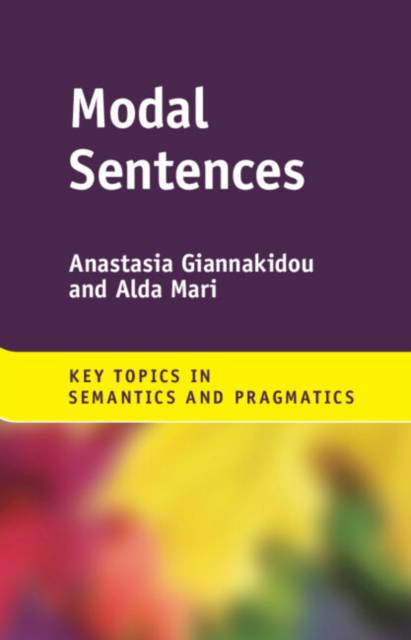
Building on the logical tradition of possible world semantics, this innovative book explores the rich and diverse empirical domain of modality in language, offering an ambitious theory of linguistic modality as indicative of uncertainty. It covers a wide variety of languages ranging from English, Greek, Italian and French, to Native American and Asian languages, and studies modals alongside evidentials, questions, and imperatives, to enable a deeper understanding of modality. The authors introduce a new analysis of linguistic necessity as conveying evidential bias, identifying new categories such as flexible necessity modals, and offering a framework for the linguistic category of evidentiality as a branch of epistemic modality. They also study the relationship between questions and modals through the concepts of nonveridical equilibrium, reflection, and evidential bias. Laying out the formal semantic tools step-by-step, it is essential reading for both scholars and students of semantics, philosophy, computational linguistics, typology and communication theory.
Specificaties
Betrokkenen
- Auteur(s):
- Uitgeverij:
Inhoud
- Aantal bladzijden:
- 348
- Taal:
- Engels
- Reeks:
Eigenschappen
- Productcode (EAN):
- 9781108839372
- Verschijningsdatum:
- 22/01/2026
- Uitvoering:
- Hardcover
- Formaat:
- Genaaid
- Afmetingen:
- 140 mm x 216 mm
- Gewicht:
- 548 g


Alleen bij Standaard Boekhandel
+ 403 punten op je klantenkaart van Standaard Boekhandel
Cadeau

AANGERADEN


Beoordelingen
We publiceren alleen reviews die voldoen aan de voorwaarden voor reviews. Bekijk onze voorwaarden voor reviews.