


- Afhalen na 1 uur in een winkel met voorraad
- Gratis thuislevering in België vanaf € 30
- Ruim aanbod met 7 miljoen producten
- Afhalen na 1 uur in een winkel met voorraad
- Gratis thuislevering in België vanaf € 30
- Ruim aanbod met 7 miljoen producten





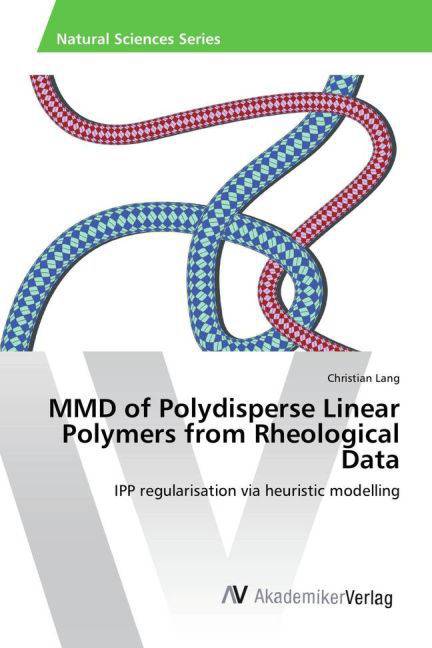
MMD of Polydisperse Linear Polymers from Rheological Data
IPP regularisation via heuristic modelling
Christian Lang
Paperback | Engels
€ 28,45
+ 56 punten
Omschrijving
The inversion of transfer coefficient functionals, such as viscoelastic moduli or viscosity, of dense polymeric liquids is associated with the solution of ill-posed problems resulting from the theory of polymer dynamics. A regularisation method based on a generalised, heuristic rheological model which ignores the thermodynamic properties and focuses on the dependence of inverse time is presented. This allows the calculation of the molecular mass distribution for rheologically simple liquids like e.g. polyethylene or polypropylene melts without any additional a priori information on the system. The provided method is successfully used with uni- and bimodal polymers for the purposes of quality assessment in polymer melt extrusion processes and degradation studies during processing.
Specificaties
Betrokkenen
- Auteur(s):
- Uitgeverij:
Inhoud
- Aantal bladzijden:
- 76
- Taal:
- Engels
Eigenschappen
- Productcode (EAN):
- 9783639870190
- Verschijningsdatum:
- 02/10/2015
- Uitvoering:
- Paperback
- Afmetingen:
- 149 mm x 220 mm
- Gewicht:
- 118 g


Alleen bij Standaard Boekhandel
+ 56 punten op je klantenkaart van Standaard Boekhandel
Cadeau

AANGERADEN


Beoordelingen
We publiceren alleen reviews die voldoen aan de voorwaarden voor reviews. Bekijk onze voorwaarden voor reviews.