


- Afhalen na 1 uur in een winkel met voorraad
- Gratis thuislevering in België vanaf € 30
- Ruim aanbod met 7 miljoen producten
- Afhalen na 1 uur in een winkel met voorraad
- Gratis thuislevering in België vanaf € 30
- Ruim aanbod met 7 miljoen producten





€ 36,95
+ 73 punten
Uitvoering
Omschrijving
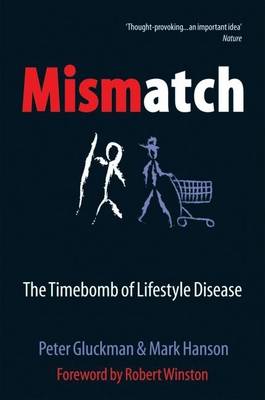
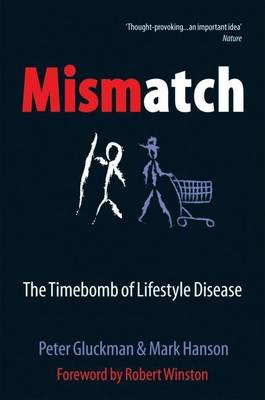
Our bodies evolved to allow our ancestors the best chance of survival as hunter-gatherers in the Savannah. Our brains, on the other hand, have allowed us to develop complex societies, cultures, and lifestyles, far removed from those of our ancestors. As a result, write Peter Gluckman and Mark Hanson in Mismatch, we have created a modern, artificial world that is painfully out of tune with our evolved bodies.
In a compelling narrative that begins with the Sherpa in Nepal, Gluckman and Hanson, both leading medical scientists, draw on the latest research, bringing together concepts from evolutionary biology, developmental science, medicine, anthropology and ecology to describe the nature of this mismatch, its consequences, and how we may counter it. The authors reveal that this mismatch has led to the current deadly explosion in "lifestyle" diseases such as diabetes and obesity, and it may well lead to increasingly frequent epidemics. There are broader consequences too for societies, such as the falling age of puberty, with its attendant mismatch with psychological maturity, and at the other end of life, the implications of increasing longevity. Is there any way out? Yes, say the authors. They propose that intervention in early human development, alongside a better focus on the health of potential mothers, can make future generations better suited to the modern world.
In this remarkable and lucidly written book, Gluckman and Hanson identify a profound and growing problem that we ignore at our peril.
In a compelling narrative that begins with the Sherpa in Nepal, Gluckman and Hanson, both leading medical scientists, draw on the latest research, bringing together concepts from evolutionary biology, developmental science, medicine, anthropology and ecology to describe the nature of this mismatch, its consequences, and how we may counter it. The authors reveal that this mismatch has led to the current deadly explosion in "lifestyle" diseases such as diabetes and obesity, and it may well lead to increasingly frequent epidemics. There are broader consequences too for societies, such as the falling age of puberty, with its attendant mismatch with psychological maturity, and at the other end of life, the implications of increasing longevity. Is there any way out? Yes, say the authors. They propose that intervention in early human development, alongside a better focus on the health of potential mothers, can make future generations better suited to the modern world.
In this remarkable and lucidly written book, Gluckman and Hanson identify a profound and growing problem that we ignore at our peril.
Specificaties
Betrokkenen
- Auteur(s):
- Uitgeverij:
Inhoud
- Aantal bladzijden:
- 298
- Taal:
- Engels
Eigenschappen
- Productcode (EAN):
- 9780199228386
- Verschijningsdatum:
- 07/04/2008
- Uitvoering:
- Paperback
- Formaat:
- Trade paperback (VS)
- Afmetingen:
- 131 mm x 197 mm
- Gewicht:
- 244 g


Alleen bij Standaard Boekhandel
+ 73 punten op je klantenkaart van Standaard Boekhandel
Cadeau

AANGERADEN


Beoordelingen
We publiceren alleen reviews die voldoen aan de voorwaarden voor reviews. Bekijk onze voorwaarden voor reviews.