


- Afhalen na 1 uur in een winkel met voorraad
- Gratis thuislevering in België vanaf € 30
- Ruim aanbod met 7 miljoen producten
- Afhalen na 1 uur in een winkel met voorraad
- Gratis thuislevering in België vanaf € 30
- Ruim aanbod met 7 miljoen producten





€ 24,45
+ 48 punten
Uitvoering
Omschrijving
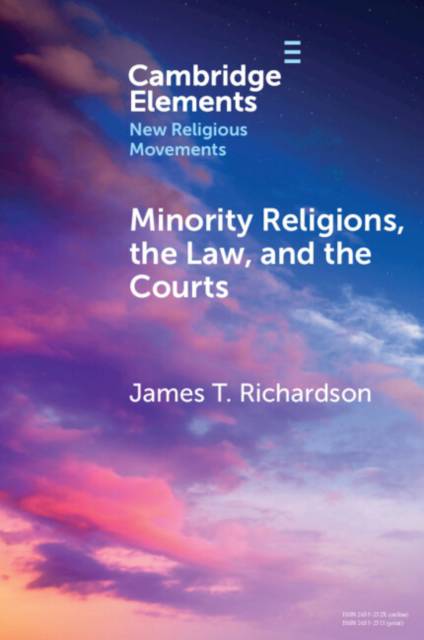
This Element examines the complex intersections between minority religions, legal protections and restrictions, and the role of courts in securing, or inhibiting, religious freedom. It considers the legal status of minority religions in selected countries from a comparative perspective, using sociology of law theories to explain how legal systems treat such religious groups. Relevant actions of the European Court of Human Rights are examined as is how minority religions are dealt with in selected societies where authoritarian or theocratic systems of governance prevail. The Element then examines how interactions with law and the courts have led to changes, or 'deformations, ' in selected well-known and controversial new and other minority religions. The Element concludes by observing how courts in Europe and North America have used cases involving minority faiths to promote their own agendas and authority, as well as accomplish other important considerations, including religious freedom.
Specificaties
Betrokkenen
- Auteur(s):
- Uitgeverij:
Inhoud
- Aantal bladzijden:
- 75
- Taal:
- Engels
- Reeks:
Eigenschappen
- Productcode (EAN):
- 9781009617260
- Verschijningsdatum:
- 11/12/2025
- Uitvoering:
- Paperback
- Formaat:
- Trade paperback (VS)
- Afmetingen:
- 152 mm x 229 mm
- Gewicht:
- 127 g


Alleen bij Standaard Boekhandel
+ 48 punten op je klantenkaart van Standaard Boekhandel
Cadeau

AANGERADEN


Beoordelingen
We publiceren alleen reviews die voldoen aan de voorwaarden voor reviews. Bekijk onze voorwaarden voor reviews.