


- Afhalen na 1 uur in een winkel met voorraad
- Gratis thuislevering in België vanaf € 30
- Ruim aanbod met 7 miljoen producten
- Afhalen na 1 uur in een winkel met voorraad
- Gratis thuislevering in België vanaf € 30
- Ruim aanbod met 7 miljoen producten





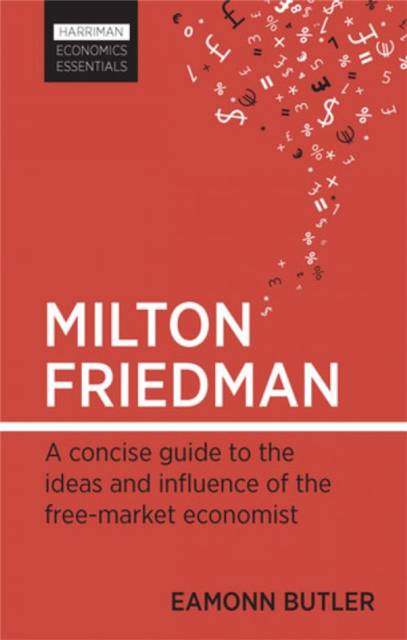
Milton Friedman
A Concise Guide to the Ideas and Influence of the Free-Market Economist
Eamonn Butler
€ 27,95
+ 55 punten
Omschrijving
"One of the most important economic thinkers of all time". (Paul Krugman). Milton Friedman changed the world. From free markets in China to the flat taxes of Eastern Europe, from the debate on drugs to interest rate policy, Friedman's skill for vivid argument and ideas led to robust and often successful challenges to a dizzying amount of received wisdom. Relying on big-picture economic analysis and an insistent faith in human freedom, he took on the economic and political orthodoxies of his day - and if he didn't always win, he never failed to change the terms of the debate. Rarely an uncontroversial figure, with his disciples and detractors to this day, this is neither a credulous nor a critical look at the Nobel laureate. A brand new guide, it simply sets out to explain his economic and public policy thinking in a straightforward and accessible way for the general reader and student. Find out: how Friedman undermined Keynesianism and the prevailing wisdom of large-scale economic intervention; how he demonstrated the true cause of the Great Depression and identified its real culprits (they weren't the ones jumping out of the windows); what Friedman believed really destroys the value of the money in your pocket and how it can be stopped; his arguments for why regulations and minimum-wage laws actually achieve lower standards and greater poverty; and, his reasons for why big corporations prefer markets that aren't free, and how high taxation harms the wealthy less than anyone else. With more, too, on democracy, equality, global trade, education, public services and financial crises, this is a concise but comprehensive guide to the influence of a key 20th century thinker. It is a must-read for anyone who wants to know more about the economist whose work changed everything.
Specificaties
Betrokkenen
- Auteur(s):
- Uitgeverij:
Inhoud
- Aantal bladzijden:
- 162
- Taal:
- Engels
- Reeks:
Eigenschappen
- Productcode (EAN):
- 9780857190369
- Verschijningsdatum:
- 25/04/2011
- Uitvoering:
- Paperback
- Formaat:
- Trade paperback (VS)
- Afmetingen:
- 140 mm x 215 mm
- Gewicht:
- 235 g


Alleen bij Standaard Boekhandel
+ 55 punten op je klantenkaart van Standaard Boekhandel
Cadeau

AANGERADEN


Beoordelingen
We publiceren alleen reviews die voldoen aan de voorwaarden voor reviews. Bekijk onze voorwaarden voor reviews.