


- Afhalen na 1 uur in een winkel met voorraad
- Gratis thuislevering in België vanaf € 30
- Ruim aanbod met 7 miljoen producten
- Afhalen na 1 uur in een winkel met voorraad
- Gratis thuislevering in België vanaf € 30
- Ruim aanbod met 7 miljoen producten





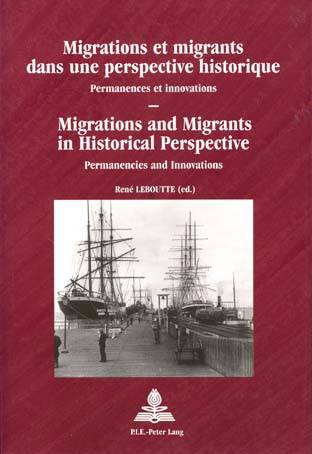
Migrations Et Migrants Dans Une Perspective Historique / Migrations and Migrants in Historical Perspective
Permanences Et Innovations / Permanencies and Innovations
€ 68,95
+ 137 punten
Omschrijving
Les migrations sont récemment réapparues comme un défi majeur pour les Etats-nations de l'Ouest, en particulier en Europe. L'augmentation rapide des flux migratoires résulte de la conjonction complexe de facteurs répulsifs et attractifs - depuis les possibilités du marché du travail jusqu'aux migrations forcées. Cependant les migrations sont enracinées dans un passé parfois lointain et les mécanismes les mieux établis ne peuvent être compris qu'en adoptant une perspective de longue durée. Les auteurs se sont efforcés non seulement d'éclaircir la complexité de la personnalité des migrants (genre, âge, éducation, religion, etc.), mais aussi de tenir compte des contextes variés des migrations (initiatives individuelles, stratégies familiales, politiques migratoires, etc.). Ils invitent le lecteur à envisager l'histoire des migrations et la situation actuelle selon une perspective nouvelle et stimulante.
Migrations have recently returned as a major challenge to the developed nation-states of the West, particularly in Europe. The dramatic increase of migratory flows is caused by a complex conjunction of push and pull factors - from labour market opportunities to forced migrations. However some migrations appear to be rooted in a remote past, and the most deep-seated mechanisms can only be understood by adopting a long-term perspective. The present contributors have not only tried to clarify the complexity of the migrant personality (gender, age, education, religion etc.), but also to take into account the various contexts of migrations (individual initiatives, family strategies, migration policies etc.). They invite us to consider the history of migrations and the present situation in a new and fresh perspective.
Migrations have recently returned as a major challenge to the developed nation-states of the West, particularly in Europe. The dramatic increase of migratory flows is caused by a complex conjunction of push and pull factors - from labour market opportunities to forced migrations. However some migrations appear to be rooted in a remote past, and the most deep-seated mechanisms can only be understood by adopting a long-term perspective. The present contributors have not only tried to clarify the complexity of the migrant personality (gender, age, education, religion etc.), but also to take into account the various contexts of migrations (individual initiatives, family strategies, migration policies etc.). They invite us to consider the history of migrations and the present situation in a new and fresh perspective.
Specificaties
Betrokkenen
- Uitgeverij:
Inhoud
- Aantal bladzijden:
- 346
- Taal:
- Engels, Frans
- Reeks:
- Reeksnummer:
- nr. 12
Eigenschappen
- Productcode (EAN):
- 9789052019093
- Verschijningsdatum:
- 3/05/2000
- Uitvoering:
- Paperback
- Formaat:
- Trade paperback (VS)
- Afmetingen:
- 150 mm x 220 mm
- Gewicht:
- 489 g


Alleen bij Standaard Boekhandel
+ 137 punten op je klantenkaart van Standaard Boekhandel
CADEAU


Beoordelingen
We publiceren alleen reviews die voldoen aan de voorwaarden voor reviews. Bekijk onze voorwaarden voor reviews.