


- Afhalen na 1 uur in een winkel met voorraad
- Gratis thuislevering in België vanaf € 30
- Ruim aanbod met 7 miljoen producten
- Afhalen na 1 uur in een winkel met voorraad
- Gratis thuislevering in België vanaf € 30
- Ruim aanbod met 7 miljoen producten





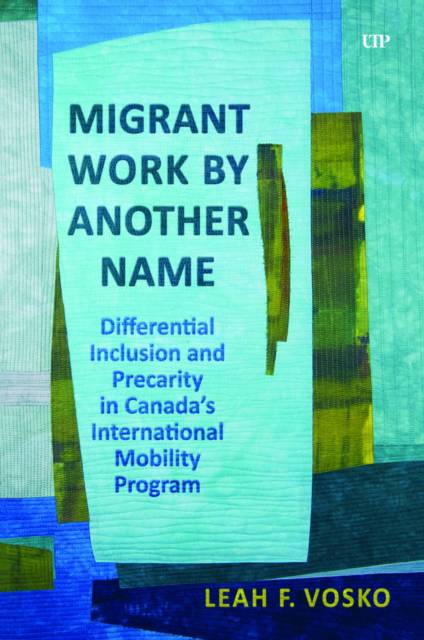
Migrant Work by Another Name
Differential Inclusion and Precarity in Canada's International Mobility Program
Leah Faith Vosko
Hardcover | Engels
€ 99,95
+ 199 punten
Omschrijving
Migrant Work by Another Name explores the complexities of Canada's evolving international migration and employment policy landscape. It critically examines the shift towards "mobility" programs under the recently inaugurated International Mobility Program (IMP). This shift occurs alongside the contraction of certain streams within Canada's long-standing Temporary Foreign Worker Program (TFWP). The book investigates the implications of policy changes, influenced at once by public outcry over migrant worker exploitation and persistent demands for labour in the face of qualitative labour shortages in high-income countries like Canada. Grounded in a decolonial feminist political economy approach, Leah F. Vosko employs a mixed methods analysis to contrast the narrative of "mobility" with the persistent realities of precarity among transnational workers.
The book features in-depth case studies of the three largest IMP subprograms - Working Holiday, Post-Graduation, and Spousal Work Permit programs - revealing how these initiatives, despite being touted as promoting mobility, provide for temporary migrant work by another name and perpetuate distinct forms of precarity. This critical perspective challenges the notion of progress in contemporary migration policies, shedding light on the ongoing challenges faced by transnational workers in Canada.
The book features in-depth case studies of the three largest IMP subprograms - Working Holiday, Post-Graduation, and Spousal Work Permit programs - revealing how these initiatives, despite being touted as promoting mobility, provide for temporary migrant work by another name and perpetuate distinct forms of precarity. This critical perspective challenges the notion of progress in contemporary migration policies, shedding light on the ongoing challenges faced by transnational workers in Canada.
Specificaties
Betrokkenen
- Auteur(s):
- Uitgeverij:
Inhoud
- Aantal bladzijden:
- 240
- Taal:
- Engels
Eigenschappen
- Productcode (EAN):
- 9781487566074
- Verschijningsdatum:
- 23/05/2025
- Uitvoering:
- Hardcover
- Formaat:
- Genaaid
- Afmetingen:
- 154 mm x 232 mm
- Gewicht:
- 566 g


Alleen bij Standaard Boekhandel
+ 199 punten op je klantenkaart van Standaard Boekhandel
Cadeau

AANGERADEN


Beoordelingen
We publiceren alleen reviews die voldoen aan de voorwaarden voor reviews. Bekijk onze voorwaarden voor reviews.