


- Afhalen na 1 uur in een winkel met voorraad
- Gratis thuislevering in België vanaf € 30
- Ruim aanbod met 7 miljoen producten
- Afhalen na 1 uur in een winkel met voorraad
- Gratis thuislevering in België vanaf € 30
- Ruim aanbod met 7 miljoen producten





€ 53,45
+ 106 punten
Omschrijving
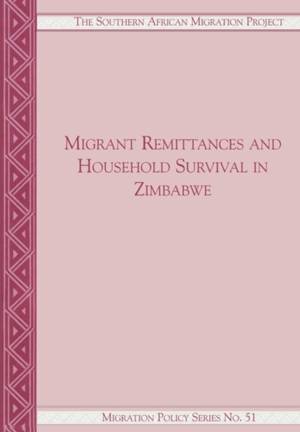
Migrant remittances are now recognised as an important source of global development finance and there is increasing evidence that international remittances have considerable developmental impacts. The contribution of remittances to GDP in many developing countries is significant and has shown a steady increase over the past decade. However, while there is a consensus that remittance flows to Africa are increasing, little attention has been paid to the impact of these transfers on poverty alleviation, primarily because of data deficiencies at the household level. Despite their obvious magnitude, accurate data on remittance flows to Zimbabwe is unavailable or inaccessible. In an attempt to address such data deficiencies, SAMP devised the household-level Migration and Remittances Survey (MARS) which was administered in several SADC countries, including Zimbabwe. The MARS study was implemented in Zimbabwe in 2005 and surveyed 723 urban and rural households.
Specificaties
Betrokkenen
- Auteur(s):
- Uitgeverij:
Inhoud
- Aantal bladzijden:
- 50
- Taal:
- Engels
Eigenschappen
- Productcode (EAN):
- 9781920118921
- Verschijningsdatum:
- 1/07/2009
- Uitvoering:
- Paperback
- Formaat:
- Trade paperback (VS)
- Afmetingen:
- 170 mm x 244 mm
- Gewicht:
- 95 g


Alleen bij Standaard Boekhandel
+ 106 punten op je klantenkaart van Standaard Boekhandel

Beoordelingen
We publiceren alleen reviews die voldoen aan de voorwaarden voor reviews. Bekijk onze voorwaarden voor reviews.