


- Afhalen na 1 uur in een winkel met voorraad
- Gratis thuislevering in België vanaf € 30
- Ruim aanbod met 7 miljoen producten
- Afhalen na 1 uur in een winkel met voorraad
- Gratis thuislevering in België vanaf € 30
- Ruim aanbod met 7 miljoen producten





€ 241,45
+ 482 punten
Omschrijving
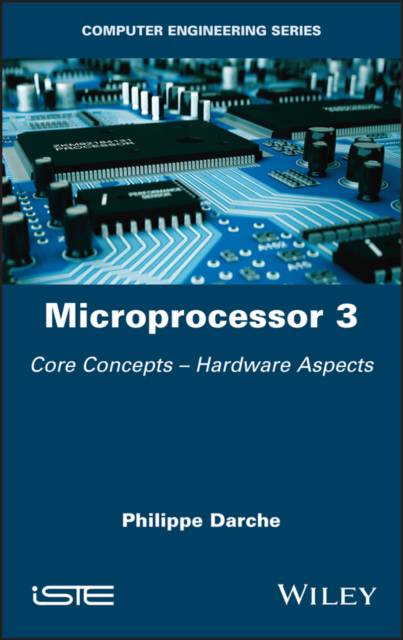
Calculation is the main function of a computer. The central unit is responsible for executing the programs. The microprocessor is its integrated form. This component, since the announcement of its marketing in 1971, has not stopped breaking records in terms of computing power, price reduction and integration of functions (calculation of basic functions, storage with integrated controllers). It is present today in most electronic devices. Knowing its internal mechanisms and programming is essential for the electronics engineer and computer scientist to understand and master the operation of a computer and advanced concepts of programming. This first volume focuses more particularly on the first generations of microprocessors, that is to say those that handle integers in 4 and 8-bit formats. The first chapter presents the calculation function and reminds the memory function. The following is devoted to notions of calculation model and architecture. The concept of bus is then presented. Chapters 4 and 5 can then address the internal organization and operation of the microprocessor first in hardware and then software. The mechanism of the function call, conventional and interrupted, is more particularly detailed in a separate chapter. The book ends with a presentation of architectures of the first microcomputers for a historical perspective. The knowledge is presented in the most exhaustive way possible with examples drawn from current and old technologies that illustrate and make accessible the theoretical concepts. Each chapter ends if necessary with corrected exercises and a bibliography. The list of acronyms used and an index are at the end of the book.
Specificaties
Betrokkenen
- Auteur(s):
- Uitgeverij:
Inhoud
- Aantal bladzijden:
- 240
- Taal:
- Engels
Eigenschappen
- Productcode (EAN):
- 9781786305657
- Verschijningsdatum:
- 15/12/2020
- Uitvoering:
- Hardcover
- Formaat:
- Genaaid
- Afmetingen:
- 156 mm x 234 mm
- Gewicht:
- 512 g



Alleen bij Standaard Boekhandel
+ 482 punten op je klantenkaart van Standaard Boekhandel
Cadeau

AANGERADEN


Beoordelingen
We publiceren alleen reviews die voldoen aan de voorwaarden voor reviews. Bekijk onze voorwaarden voor reviews.