


- Afhalen na 1 uur in een winkel met voorraad
- Gratis thuislevering in België vanaf € 30
- Ruim aanbod met 7 miljoen producten
- Afhalen na 1 uur in een winkel met voorraad
- Gratis thuislevering in België vanaf € 30
- Ruim aanbod met 7 miljoen producten





€ 76,45
+ 152 punten
Eenvoudig bestellen
Veilig betalen


Gratis thuislevering vanaf € 30 (via bpost)
Gratis levering in je Standaard Boekhandel
Omschrijving
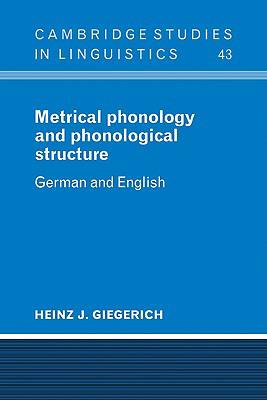
In this monograph, the first to be exclusively concerned with a model of phonological structure that is becoming increasingly influential, Heinz Giegerich pursues two major aims. First, he explores the theoretical foundations of 'metrical phonology' and in so doing suggests that the current model should be significantly simplified: auxiliary devices such as 'prosodic categories', ' metrical grids' and segmental stress features are shown to be unnecessary in this study. Secondly, he applies the model to a wide range of German and English data and in particular provides a detailed account of the stress patterns of German words - native and nonnative, morphologically simple and complex. The many similarities between German and English phonological structure are thereby strikingly illustrated. The book's clarity of exposition will enable readers not wholly familiar with metrical phonology to appreciate fully the elegance of this model in, arguably, its most basic form.
Specificaties
Betrokkenen
- Auteur(s):
- Uitgeverij:
Inhoud
- Aantal bladzijden:
- 312
- Taal:
- Engels
- Reeks:
- Reeksnummer:
- nr. 43
Eigenschappen
- Productcode (EAN):
- 9780521106078
- Verschijningsdatum:
- 2/04/2009
- Uitvoering:
- Paperback
- Formaat:
- Trade paperback (VS)
- Afmetingen:
- 152 mm x 229 mm
- Gewicht:
- 458 g


Alleen bij Standaard Boekhandel
+ 152 punten op je klantenkaart van Standaard Boekhandel
CADEAU

AANGERADEN


Beoordelingen
We publiceren alleen reviews die voldoen aan de voorwaarden voor reviews. Bekijk onze voorwaarden voor reviews.