


- Afhalen na 1 uur in een winkel met voorraad
- Gratis thuislevering in België vanaf € 30
- Ruim aanbod met 7 miljoen producten
- Afhalen na 1 uur in een winkel met voorraad
- Gratis thuislevering in België vanaf € 30
- Ruim aanbod met 7 miljoen producten





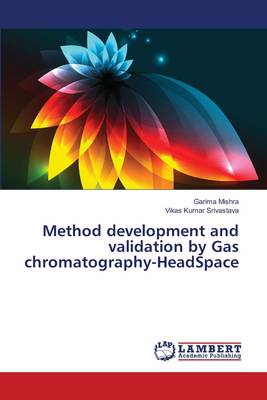
Method development and validation by Gas chromatography-HeadSpace
Garima Mishra, Vikas Kumar Srivastava
Paperback | Engels
€ 80,45
Omschrijving
Residual solvents in pharmaceutical samples are monitored using gas chromatography with head space. Based on good manufacturing practices, measuring residual solvents is mandatory for the release testing of all active pharmaceutical ingredients (API). The analysis of residual organic solvents (methanol, ethanol, acetone and toluene) in Omeprazole API was investigated.The Head space gas chromatography (HSGC) method described in this investigation utilized a DB - 624, 30 m long x 0.32 mm internal diameter, 1.8 μm thick column. Since Omeprazole is a thermally labile compound, the selection of the proper injector temperature is critical to the success of the analysis. The injector temperature was set at 180°C to prevent degradation. The initial oven temperature was set at 50°C for 10 min and programmed at a rate of 30°C min-1 to a final temperature of 200°C for 10 min. Nitrogen was used as a carrier gas and flame ionization detector was used. N, N-dimethyl formamide was selected as a diluent. The method was validated according to ICH guidelines and found to be specific, linear i.e., C.C is 0.998, % RSD of each analyte is less than 8%, sensitive, rugged and showed excellent recovery.
Specificaties
Betrokkenen
- Auteur(s):
- Uitgeverij:
Inhoud
- Aantal bladzijden:
- 96
- Taal:
- Engels
Eigenschappen
- Productcode (EAN):
- 9783659492914
- Verschijningsdatum:
- 27/11/2013
- Uitvoering:
- Paperback
- Formaat:
- Trade paperback (VS)
- Afmetingen:
- 152 mm x 229 mm
- Gewicht:
- 149 g


Alleen bij Standaard Boekhandel
Wedstrijd


Beoordelingen
We publiceren alleen reviews die voldoen aan de voorwaarden voor reviews. Bekijk onze voorwaarden voor reviews.