


- Afhalen na 1 uur in een winkel met voorraad
- Gratis thuislevering in België vanaf € 30
- Ruim aanbod met 7 miljoen producten
- Afhalen na 1 uur in een winkel met voorraad
- Gratis thuislevering in België vanaf € 30
- Ruim aanbod met 7 miljoen producten





Omschrijving
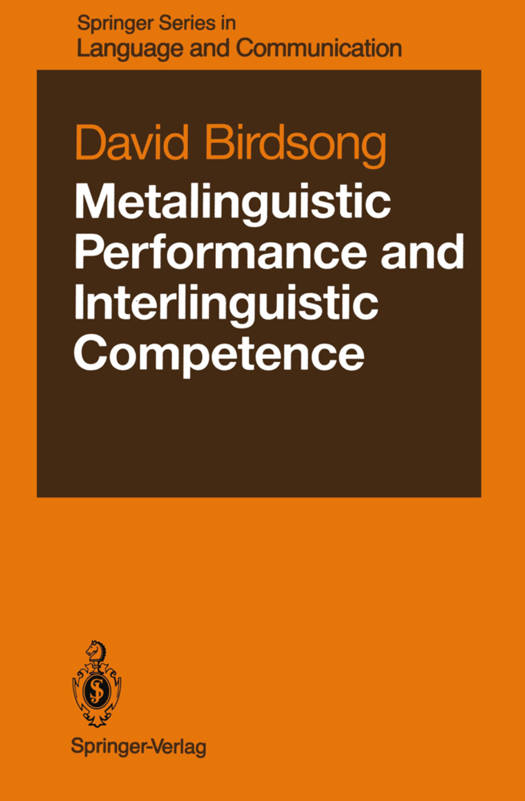
It is often assumed that metalinguistic performance (e.g., detection of ambiguity, judgments of grammaticality) straightforwardly reflects linguistic knowledge. The inadequacies of such an assumption are explored in this volume, which documents the subtleties of the relationship between metalinguistic performance and knowledge of a second language (interlinguistic competence) from the perspectives of language acquisition theory and cognitive and developmental psychology. This thorough and up-to-date examination of metalinguistic phenomena offers insight to those involved in designing elicitation materials, analyzing and interpreting metalinguistic performance data, and applying such evidence to descriptions of interlanguage grammars and to second-language acquisition theory. The book also contributes constructively to the current debate concerning the role of metalinguistic variables in second-language acquisition, that is, how they ultimately affect success or failure in learning a second language.
Specificaties
Betrokkenen
- Auteur(s):
- Uitgeverij:
Inhoud
- Aantal bladzijden:
- 246
- Taal:
- Engels
- Reeks:
- Reeksnummer:
- nr. 25
Eigenschappen
- Productcode (EAN):
- 9783642741265
- Verschijningsdatum:
- 16/12/2011
- Uitvoering:
- Paperback
- Formaat:
- Trade paperback (VS)
- Afmetingen:
- 156 mm x 234 mm
- Gewicht:
- 367 g


Alleen bij Standaard Boekhandel
+ 211 punten op je klantenkaart van Standaard Boekhandel
Wedstrijd


Beoordelingen
We publiceren alleen reviews die voldoen aan de voorwaarden voor reviews. Bekijk onze voorwaarden voor reviews.