


- Afhalen na 1 uur in een winkel met voorraad
- Gratis thuislevering in België vanaf € 30
- Ruim aanbod met 7 miljoen producten
- Afhalen na 1 uur in een winkel met voorraad
- Gratis thuislevering in België vanaf € 30
- Ruim aanbod met 7 miljoen producten





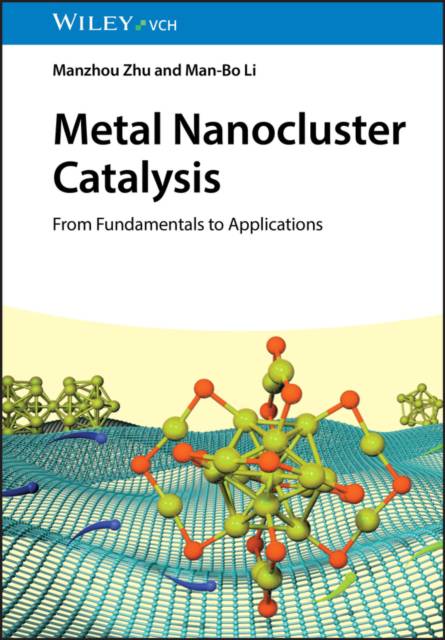
Metal Nanocluster Catalysis
From Fundamentals to Applications
Manzhou Zhu, Man-Bo Li
Hardcover | Engels
€ 146,95
+ 293 punten
Omschrijving
The book covers three kinds of metal nanoclusters that have been widely employed in catalysis: (i) in-situ generated metal nanoclusters, which are spontaneously formed by metal catalysts during the reaction; (ii) supported metal nanoclusters, which are obtained by loading the active metal nanoclusters on relatively robust supports, such as carbon nanomaterials (carbon nanotube, graphene), metallic oxides (TiO2, SiO2, CeO2), etc; (iii) organic ligand protected metal nanoclusters, which have defined molecular formulas and atomically precise structures, and can be designed and synthesized by wet-chemical reduction methods and other recently developed methods. It also introduces each metal nanocluster catalysis from its formation processes to their unique structures, and then to their catalytic performance and catalytic mechanisms. In addition, this book describes their catalytic activities in photo-, electro- and enzyme-mediated processes. Finally, the application of metal nanoclusters in industrial catalysis and the opportunities and challenges of metal nanocluster catalysis have also been discussed. This book serves as a valuable reference for the wide readership in both academic and industrial research to understand the current progress as well as the fundamental theory and applications of metal nanocluster catalysis.
Specificaties
Betrokkenen
- Auteur(s):
- Uitgeverij:
Inhoud
- Aantal bladzijden:
- 352
- Taal:
- Engels
Eigenschappen
- Productcode (EAN):
- 9783527355266
- Verschijningsdatum:
- 9/06/2026
- Uitvoering:
- Hardcover
- Formaat:
- Genaaid
- Afmetingen:
- 170 mm x 244 mm
- Gewicht:
- 801 g



Alleen bij Standaard Boekhandel
+ 293 punten op je klantenkaart van Standaard Boekhandel
Cadeau

AANGERADEN


Beoordelingen
We publiceren alleen reviews die voldoen aan de voorwaarden voor reviews. Bekijk onze voorwaarden voor reviews.