


- Afhalen na 1 uur in een winkel met voorraad
- Gratis thuislevering in België vanaf € 30
- Ruim aanbod met 7 miljoen producten
- Afhalen na 1 uur in een winkel met voorraad
- Gratis thuislevering in België vanaf € 30
- Ruim aanbod met 7 miljoen producten





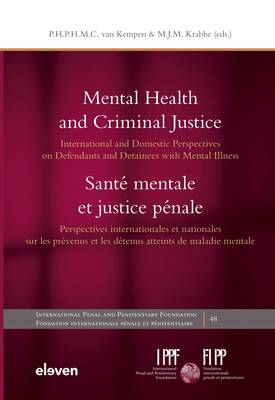
Mental Health and Criminal Justice / Santé mentale et justice pénale
€ 155,50
+ 311 punten
Omschrijving
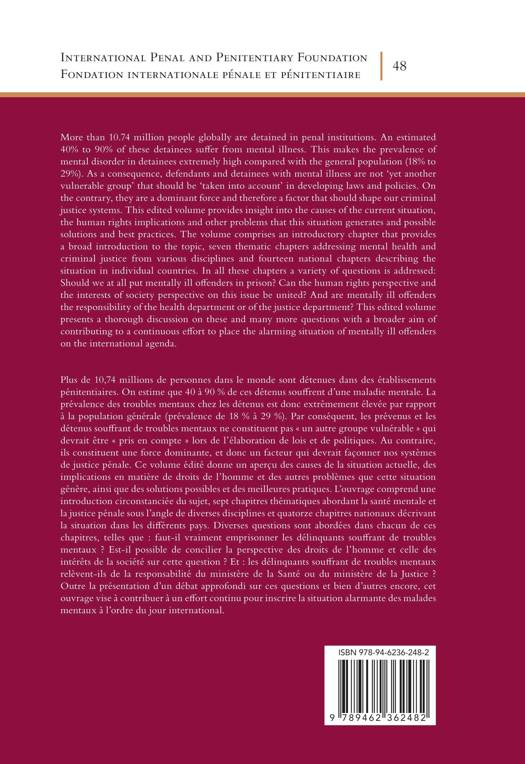
More than 10.74 million people globally are detained in penal institutions. An estimated 40% to 90% of these detainees suffer from mental illness. This makes the prevalence of mental disorder in detainees extremely high compared with the general population (18% to 29%). As a consequence, defendants and detainees with mental illness are not 'yet another vulnerable group' that should be 'taken into account' in developing laws and policies On the contrary, they are a dominant force and therefore a factor that should shape our criminal justice systems. This edited volume provides insight into the causes of the current situation, the human rights implications and other problems that this situation generates and possible solutions and best practices. The volume comprises an introductory chapter that provides a broad introduction to the topic, seven thematic chapters addressing mental health and criminal justice from various disciplines and fourteen national chapters describing the situation in individual countries. In all these chapters a variety of questions is addressed: Should we at all put mentally ill offenders in prison? Can the human rights perspective and the interests of society perspective on this issue be united? And are mentally ill offenders the responsibility of the health department or of the justice department? This edited volume presents a thorough discussion on these and many more questions with a broader aim of contributing to a continuous effort to place the alarming situation of mentally ill offenders on the international agenda. Plus de 10,74 millions de personnes dans le monde sont détenues dans des établissements pénitentiaires. On estime que 40 à 90 % de ces détenus souffrent d'une maladie mentale. La prévalence des troubles mentaux chez les détenus est donc extrêmement élevée par rapport à la population générale (prévalence de 18 % à 29 %). Par conséquent, les prévenus et les détenus souffrant de troubles mentaux ne constituent pas un autre groupe vulnérable qui devrait être pris en compte lors de l'élaboration de lois et de politiques. Au contraire, ils constituent une force dominante, et donc un facteur qui devrait façonner nos systèmes de justice pénale. Ce volume édité donne un aperçu des causes de la situation actuelle, des implications en matière de droits de l'homme et des autres problèmes que cette situation génère, ainsi que des solutions possibles et des meilleures pratiques. L'ouvrage comprend une introduction circonstanciée du sujet, sept chapitres thématiques abordant la santé mentale et la justice pénale sous l'angle de diverses disciplines et quatorze chapitres nationaux décrivant la situation dans les différents pays. Diverses questions sont abordées dans chacun de ces chapitres, telles que: faut-il vraiment emprisonner les délinquants souffrant de troubles mentaux? Est-il possible de concilier la perspective des droits de l'homme et celle des intérêts de la société sur cette question? Et: les délinquants souffrant de troubles mentaux relèvent-ils de la responsabilité du ministère de la Santé ou du ministère de la Justice? Outre la présentation d'un débat approfondi sur ces questions et bien d'autres encore, cet ouvrage vise à contribuer à un effort continu pour inscrire la situation alarmante des malades mentaux à l'ordre du jour international.
Specificaties
Betrokkenen
- Uitgeverij:
Inhoud
- Aantal bladzijden:
- 522
- Taal:
- Engels
- Reeks:
- Reeksnummer:
- nr. 48
Eigenschappen
- Productcode (EAN):
- 9789462362482
- Verschijningsdatum:
- 10/01/2022
- Uitvoering:
- Hardcover
- Formaat:
- Genaaid
- Afmetingen:
- 170 mm x 244 mm
- Gewicht:
- 1026 g

Alleen bij Standaard Boekhandel
+ 311 punten op je klantenkaart van Standaard Boekhandel
Cadeau

AANGERADEN


Beoordelingen
We publiceren alleen reviews die voldoen aan de voorwaarden voor reviews. Bekijk onze voorwaarden voor reviews.