



Je cadeautjes zeker op tijd in huis hebben voor de feestdagen? Kom langs in onze winkels en vind het perfecte geschenk!
- Afhalen na 1 uur in een winkel met voorraad
- Gratis thuislevering in België vanaf € 30
- Ruim aanbod met 7 miljoen producten
Je cadeautjes zeker op tijd in huis hebben voor de feestdagen? Kom langs in onze winkels en vind het perfecte geschenk!
- Afhalen na 1 uur in een winkel met voorraad
- Gratis thuislevering in België vanaf € 30
- Ruim aanbod met 7 miljoen producten





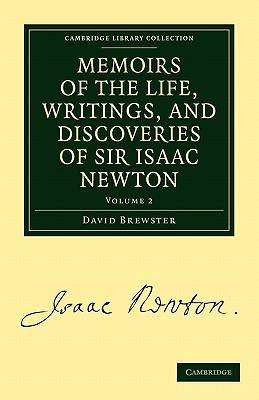
Memoirs of the Life, Writings, and Discoveries of Sir Isaac Newton - Volume 2
David Brewster
€ 95,45
+ 190 punten
Omschrijving
Sir David Brewster (1781-1868) was a Scottish physicist, mathematician, astronomer, inventor, and writer of international reputation. His biography of Sir Isaac Newton, published in 1855 and reissued in 1860, was the result of over twenty years' research, undertaken while publishing hundreds of scientific papers of his own. Brewster made use of previously unknown correspondence by Newton, and his own scientific interests, particularly in optics, meant that he was able to understand and explain Newton's work. It covered the many facets of Newton's personality and work, remaining the best available study of Newton for over a century. Brewster reveals much about the science of his own time in his handling of earlier centuries, and as a cleric was obviously uncomfortable about the evidence of Newton's unorthodox religious views and alchemical studies. Volume 2 covers the period from the dispute with Leibniz to Newton's death, and considers his posthumous reputation.
Specificaties
Betrokkenen
- Auteur(s):
- Uitgeverij:
Inhoud
- Aantal bladzijden:
- 454
- Taal:
- Engels
- Reeks:
Eigenschappen
- Productcode (EAN):
- 9781108025577
- Verschijningsdatum:
- 16/12/2010
- Uitvoering:
- Paperback
- Formaat:
- Trade paperback (VS)
- Afmetingen:
- 140 mm x 216 mm
- Gewicht:
- 571 g


Alleen bij Standaard Boekhandel
+ 190 punten op je klantenkaart van Standaard Boekhandel
CADEAU


Beoordelingen
We publiceren alleen reviews die voldoen aan de voorwaarden voor reviews. Bekijk onze voorwaarden voor reviews.