



Je cadeautjes zeker op tijd in huis hebben voor de feestdagen? Kom langs in onze winkels en vind het perfecte geschenk!
- Afhalen na 1 uur in een winkel met voorraad
- Gratis thuislevering in België vanaf € 30
- Ruim aanbod met 7 miljoen producten
Je cadeautjes zeker op tijd in huis hebben voor de feestdagen? Kom langs in onze winkels en vind het perfecte geschenk!
- Afhalen na 1 uur in een winkel met voorraad
- Gratis thuislevering in België vanaf € 30
- Ruim aanbod met 7 miljoen producten





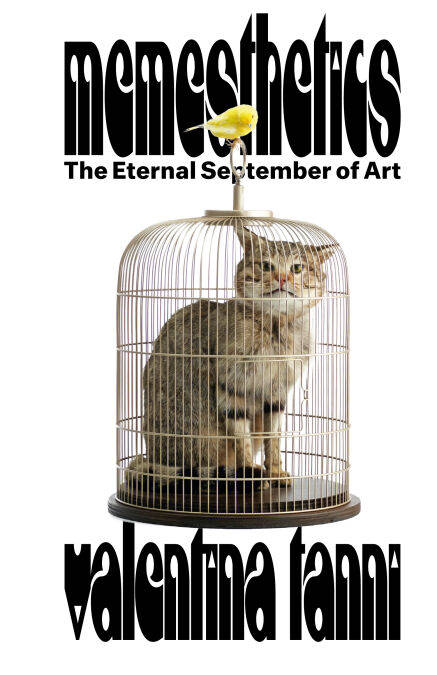
Omschrijving
Art in the twenty-first century has become a strange affair, even stranger than it was in the twentieth. The internet, new technologies, and social media have raided our visual universe with GIFs, photoshopping, and all manner of appropriation. Trolls, YouTubers, and Instagrammers are bequeathing us a set of practices and aesthetics that recall the precepts of the historical avant-gardes, playfully distorted in the weirdest, wildest, most uninhibited ways. So, how has the art we still find in museums and galleries responded to such a reckoning? And more importantly: what if the art history textbooks of the future listed not the works of a few nineteenth-century artist-geniuses, but the memes of all those anonymous users hiding behind improbable pseudonyms? Memesthetics is the first book to draw a comprehensive cartography of the relationship between visual arts and digital culture since the early 2000s. Tracing the path that's taken us "from Duchamp to TikTok," Valentina Tanni defines the contours of one of the most interesting, and at times disturbing, landscapes of our present.
Valentina Tanni is an art historian, curator, and lecturer. Her research is centered on the relationship between art and technology, with particular attention to internet culture. She teaches Digital Art at the Polytechnic University of Milan; New Media Aesthetics at NABA—New Academy of Fine Arts in Rome; Meme Culture & Aesthetics and Digital Media Culture at John Cabot University in Rome. She is also the author of Exit Reality (NERO, 2023).
—
Memesthetics is the first book to consider the history of the internet meme. Valentina Tanni makes us aware that the meme did not arise out of nowhere but in fact is connected to the thrusts of both modernism and postmodernism. In this way, Memesthetics does for the internet what Claire Bishop's Artificial Hells did for obscure forms of performance art.
KENNETH GOLDSMITH
Valentina Tanni is an art historian, curator, and lecturer. Her research is centered on the relationship between art and technology, with particular attention to internet culture. She teaches Digital Art at the Polytechnic University of Milan; New Media Aesthetics at NABA—New Academy of Fine Arts in Rome; Meme Culture & Aesthetics and Digital Media Culture at John Cabot University in Rome. She is also the author of Exit Reality (NERO, 2023).
—
Memesthetics is the first book to consider the history of the internet meme. Valentina Tanni makes us aware that the meme did not arise out of nowhere but in fact is connected to the thrusts of both modernism and postmodernism. In this way, Memesthetics does for the internet what Claire Bishop's Artificial Hells did for obscure forms of performance art.
KENNETH GOLDSMITH
Specificaties
Betrokkenen
- Auteur(s):
- Uitgeverij:
Inhoud
- Aantal bladzijden:
- 249
- Taal:
- Engels
Eigenschappen
- Productcode (EAN):
- 9788880562597
- Verschijningsdatum:
- 16/04/2024
- Uitvoering:
- E-book
- Beveiligd met:
- Digital watermarking
- Formaat:
- ePub


Alleen bij Standaard Boekhandel
+ 9 punten op je klantenkaart van Standaard Boekhandel
CADEAU


Beoordelingen
We publiceren alleen reviews die voldoen aan de voorwaarden voor reviews. Bekijk onze voorwaarden voor reviews.