


- Afhalen na 1 uur in een winkel met voorraad
- Gratis thuislevering in België vanaf € 30
- Ruim aanbod met 7 miljoen producten
- Afhalen na 1 uur in een winkel met voorraad
- Gratis thuislevering in België vanaf € 30
- Ruim aanbod met 7 miljoen producten





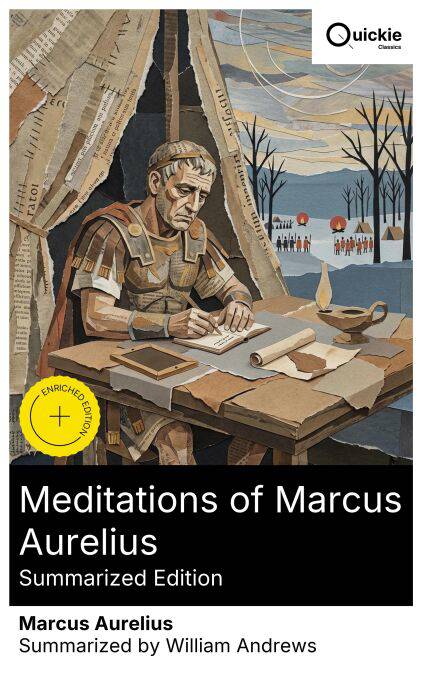
Meditations of Marcus Aurelius (Summarized Edition) E-BOOK
Enriched edition. Practices in impermanence, assent, and control—Stoic counsel for duty, gratitude, and humane rule amid war and plague
Marcus Aurelius
E-book | Engels
€ 1,99
+ 1 punten
Omschrijving
Meditations of Marcus Aurelius is the Roman emperor's private notebook, twelve books of reflections composed during campaigns in the second century CE. Aphoristic, fragmentary, and austere, it stages Stoic exercises rather than systematic doctrine: rehearsals of impermanence, assent, and the dichotomy of control; reminders of duty to the cosmopolis and of living according to nature and logos. In dialogue with Epictetus and tinged with Heraclitean flux, its rhetoric is spare and unsparing of imperial vanity. Ruling from 161 to 180, Marcus wrote not for an audience but for himself, often at Carnuntum on the Danube amid the Marcomannic wars and Antonine Plague. Trained by Junius Rusticus, with Epictetus as guide, and schooled in rhetoric by Fronto and philosophy by Apollonius, he preferred Greek for moral clarity. The burdens of command, illness, and mortality pressed him toward a regimen of reminders, cultivating steadiness, gratitude, and humane governance. Readers seeking practical wisdom, leadership ethics, or resilient habits will find this a lucid companion. Read slowly, in short passages, and return often; the meditative cadence rewards repetition. Whether approached in translation or in Greek, its disciplined counsel remains bracing, humane, and deeply usable for anyone navigating change, responsibility, and the ordinariness of suffering.
Quickie Classics summarizes timeless works with precision, preserving the author's voice and keeping the prose clear, fast, and readable—distilled, never diluted. Enriched Edition extras: Introduction · Synopsis · Historical Context · Author Biography · Brief Analysis · 4 Reflection Q&As · Editorial Footnotes.
Quickie Classics summarizes timeless works with precision, preserving the author's voice and keeping the prose clear, fast, and readable—distilled, never diluted. Enriched Edition extras: Introduction · Synopsis · Historical Context · Author Biography · Brief Analysis · 4 Reflection Q&As · Editorial Footnotes.
Specificaties
Betrokkenen
- Auteur(s):
- Vertaler(s):
- Uitgeverij:
Inhoud
- Aantal bladzijden:
- 77
- Taal:
- Engels
Eigenschappen
- Productcode (EAN):
- 8596547877165
- Verschijningsdatum:
- 09/01/2026
- Uitvoering:
- E-book
- Beveiligd met:
- Digital watermarking
- Formaat:
- ePub


Alleen bij Standaard Boekhandel
+ 1 punten op je klantenkaart van Standaard Boekhandel
Cadeau

AANGERADEN


Beoordelingen
We publiceren alleen reviews die voldoen aan de voorwaarden voor reviews. Bekijk onze voorwaarden voor reviews.