


- Afhalen na 1 uur in een winkel met voorraad
- Gratis thuislevering in België vanaf € 30
- Ruim aanbod met 7 miljoen producten
- Afhalen na 1 uur in een winkel met voorraad
- Gratis thuislevering in België vanaf € 30
- Ruim aanbod met 7 miljoen producten





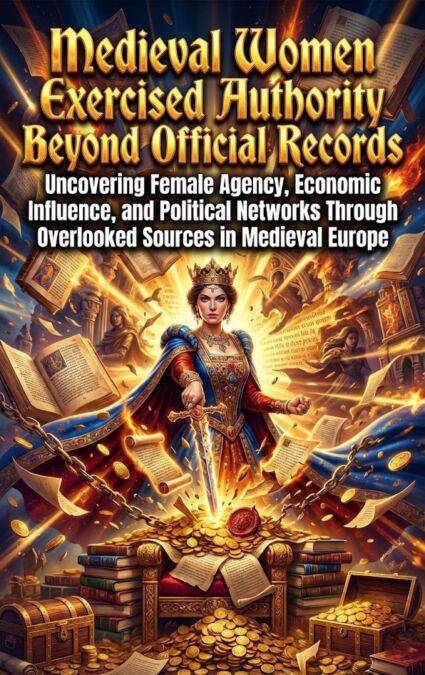
Medieval Women Exercised Authority Beyond Official Records E-BOOK
Uncovering Female Agency, Economic Influence, and Political Networks Through Overlooked Sources in Medieval Europe
Sarah Whitfield
E-book | Engels
€ 7,99
+ 7 punten
Omschrijving
Medieval women's power operated through channels that traditional chronicles rarely documented—property management, religious patronage, trade networks, and household governance. This book examines how women across social classes exercised agency within and beyond legal constraints, revealing a more complex picture of medieval society than male-centered narratives suggest.
Drawing on wills, account books, monastic records, and material evidence, the narrative traces how women managed estates during Crusades, controlled wealth through dowries and inheritances, founded religious institutions, and influenced political decisions through kinship networks. Noblewomen negotiated treaties, merchant wives ran businesses, and abbesses governed entire communities with administrative and spiritual authority.
The book explores how women's documented activities challenge assumptions about medieval gender restrictions. Through analysis of legal documents, correspondence, and archaeological finds, it reveals economic contributions, intellectual networks, and political strategies that shaped medieval life. Relevant for understanding how power functions outside formal institutions and how historical narratives privilege certain sources while marginalizing others that would complicate simplified stories about women's exclusion from medieval public life.
Drawing on wills, account books, monastic records, and material evidence, the narrative traces how women managed estates during Crusades, controlled wealth through dowries and inheritances, founded religious institutions, and influenced political decisions through kinship networks. Noblewomen negotiated treaties, merchant wives ran businesses, and abbesses governed entire communities with administrative and spiritual authority.
The book explores how women's documented activities challenge assumptions about medieval gender restrictions. Through analysis of legal documents, correspondence, and archaeological finds, it reveals economic contributions, intellectual networks, and political strategies that shaped medieval life. Relevant for understanding how power functions outside formal institutions and how historical narratives privilege certain sources while marginalizing others that would complicate simplified stories about women's exclusion from medieval public life.
Specificaties
Betrokkenen
- Auteur(s):
- Uitgeverij:
Inhoud
- Aantal bladzijden:
- 166
- Taal:
- Engels
Eigenschappen
- Productcode (EAN):
- 9783565216611
- Verschijningsdatum:
- 31/01/2026
- Uitvoering:
- E-book
- Formaat:
- ePub


Alleen bij Standaard Boekhandel
+ 7 punten op je klantenkaart van Standaard Boekhandel
AANGERADEN


Beoordelingen
We publiceren alleen reviews die voldoen aan de voorwaarden voor reviews. Bekijk onze voorwaarden voor reviews.