



Bedankt voor het vertrouwen het afgelopen jaar! Om jou te bedanken bieden we GRATIS verzending (in België) aan op alles gedurende de hele maand januari.
- Afhalen na 1 uur in een winkel met voorraad
- Gratis thuislevering in België vanaf € 30
- Ruim aanbod met 7 miljoen producten
Bedankt voor het vertrouwen het afgelopen jaar! Om jou te bedanken bieden we GRATIS verzending (in België) aan op alles gedurende de hele maand januari.
- Afhalen na 1 uur in een winkel met voorraad
- Gratis thuislevering in België vanaf € 30
- Ruim aanbod met 7 miljoen producten





Omschrijving
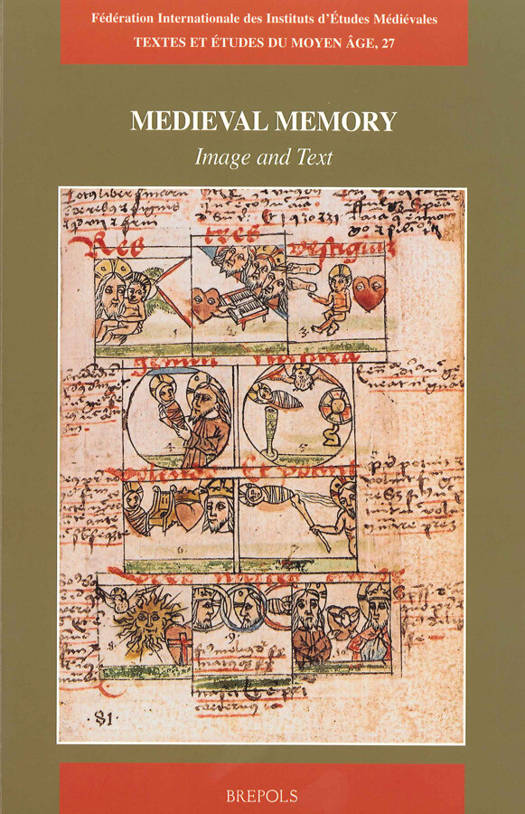
Scholars of medieval literary and cultural history have grown more aware of the crucial role of memory in the production, reception and functioning of texts and manuscripts. We owe this to the pioneering studies of Frances Yates and, more recently, Mary Carruthers and Susan Hagen. Historical linguists for their part try to describe the linguistic means by which listeners and readers are enabled to store the information flow in their memories. The relationship between medieval texts and memory is at the centre of this book. Seven historians of literature, three linguists and one art historian have contributed eleven essays, subsumed under three sections. The first section, 'Memory Texts', discusses genres that belong to medieval mnemonics. In the second and most extensive section, 'Memory Aspects in Texts', the focus is on literature and, more particularly, on how attention for mnemonics can enhance our insight into the form, composition and functioning of literary texts and manuscripts. Mental and visual images play a central role here. 'Text Memory', the final section, analyses medieval (French) literary discourse as a fabric of reference chains, in which different grammatical markers generate and organise mental representations in the memory.
Specificaties
Betrokkenen
- Auteur(s):
- Uitgeverij:
Inhoud
- Aantal bladzijden:
- 282
- Taal:
- Frans
Eigenschappen
- Productcode (EAN):
- 9782503516837
- Verschijningsdatum:
- 8/12/2004
- Uitvoering:
- Paperback
- Formaat:
- Trade paperback (VS)
- Afmetingen:
- 163 mm x 249 mm
- Gewicht:
- 635 g


Alleen bij Standaard Boekhandel
+ 63 punten op je klantenkaart van Standaard Boekhandel
CADEAU


Beoordelingen
We publiceren alleen reviews die voldoen aan de voorwaarden voor reviews. Bekijk onze voorwaarden voor reviews.