


- Afhalen na 1 uur in een winkel met voorraad
- Gratis thuislevering in België vanaf € 30
- Ruim aanbod met 7 miljoen producten
- Afhalen na 1 uur in een winkel met voorraad
- Gratis thuislevering in België vanaf € 30
- Ruim aanbod met 7 miljoen producten





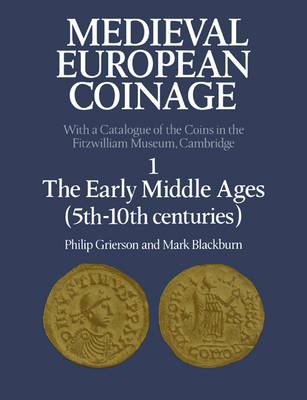
Medieval European Coinage
Volume 1, the Early Middle Ages (5th 10th Centuries)
Philip Raymond Grierson, Mark Blackburn, Grierson Philip
€ 149,95
+ 299 punten
Omschrijving
This, the first volume of Medieval European Coinage, surveys the coinage of Western Europe from the fall of the Roman Empire in the West in the fifth century to the emergence of recognizable 'national' political units in the tenth. It starts with the Vandals, Visigoths, Burgundians and other Germanic invaders of the Empire, whose coins were modelled on contemporary issues of the Western or Eastern emperors. The coinage of the Franks is followed from early Merovingian times through to the establishment and subsequent fragmentation of the Carolingian empire. Italy is represented by the coinages of the Ostrogoths, Lombards, Carolingians and popes down to the Ottoman conquest in the mid-tenth century. The coinage of the Anglo-Saxons is traced from the introduction of minting in the early seventh century to the emergence of a united kingdom during the first half of the tenth century, including the aberrant coinages of Northumbria and the Anglo-Viking coinages of the Danelaw.
Specificaties
Betrokkenen
- Auteur(s):
- Uitgeverij:
Inhoud
- Aantal bladzijden:
- 704
- Taal:
- Engels
- Reeks:
- Reeksnummer:
- nr. 1
Eigenschappen
- Productcode (EAN):
- 9780521031776
- Verschijningsdatum:
- 2/07/2007
- Uitvoering:
- Paperback
- Formaat:
- Trade paperback (VS)
- Afmetingen:
- 189 mm x 246 mm
- Gewicht:
- 1233 g


Alleen bij Standaard Boekhandel
+ 299 punten op je klantenkaart van Standaard Boekhandel
AANGERADEN


Beoordelingen
We publiceren alleen reviews die voldoen aan de voorwaarden voor reviews. Bekijk onze voorwaarden voor reviews.