


- Afhalen na 1 uur in een winkel met voorraad
- Gratis thuislevering in België vanaf € 30
- Ruim aanbod met 7 miljoen producten
- Afhalen na 1 uur in een winkel met voorraad
- Gratis thuislevering in België vanaf € 30
- Ruim aanbod met 7 miljoen producten





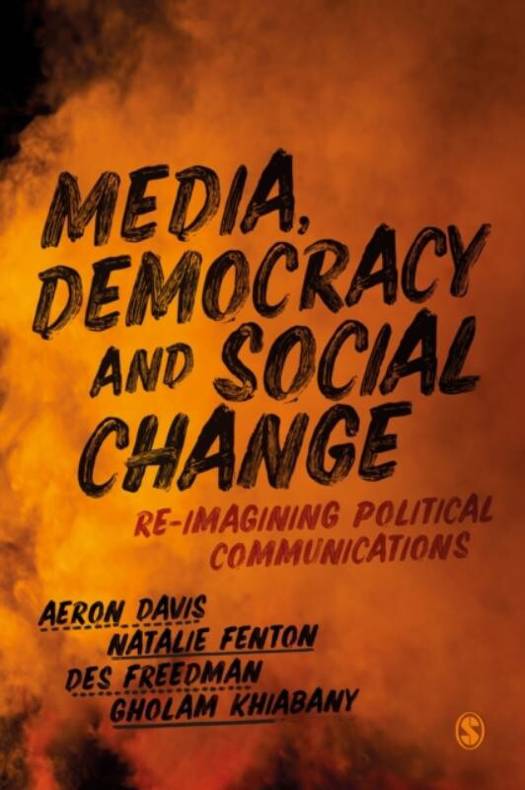
Media, Democracy and Social Change
Re-Imagining Political Communications
Aeron Davis, Natalie Fenton, Des Freedman, Gholam Khiabany
Hardcover | Engels
€ 227,45
+ 454 punten
Uitvoering
Omschrijving
When we are told so regularly that we live in a 'post truth' age and are surrounded by 'fake news', it can be tempting to think of politics as primarily mediated. Discussion and analysis of public affairs is preoccupied with the power and reach of platforms or the passion and rage of social media exchanges. As important as these issues may be, a focus on the communicative risks downgrading the political.
Media, Democracy and Social Change puts politics back into political communications. It shows how within a digital media ecology, the wider context of neoliberal capitalism remains essential for understanding what political communications is, and can hope to be.
Tackling broad themes of structural inequality, technological change, political realignment and social transformation, the book explores political communications as it relates to debates around the state, infrastructures, elites, populism, political parties, activism, the legacies of colonialism, and more.
It is both an expert introduction to the field of political communications, and a critical intervention to help re-imagine what a democratic politics might mean in a digital age. It will be essential reading for students, researchers and activists.
Aeron Davis, Natalie Fenton, Des Freedman and Gholam Khiabany all work at the Department of Media and Communication at Goldsmiths, University of London, where they teach together on the MA in Political Communications.
Media, Democracy and Social Change puts politics back into political communications. It shows how within a digital media ecology, the wider context of neoliberal capitalism remains essential for understanding what political communications is, and can hope to be.
Tackling broad themes of structural inequality, technological change, political realignment and social transformation, the book explores political communications as it relates to debates around the state, infrastructures, elites, populism, political parties, activism, the legacies of colonialism, and more.
It is both an expert introduction to the field of political communications, and a critical intervention to help re-imagine what a democratic politics might mean in a digital age. It will be essential reading for students, researchers and activists.
Aeron Davis, Natalie Fenton, Des Freedman and Gholam Khiabany all work at the Department of Media and Communication at Goldsmiths, University of London, where they teach together on the MA in Political Communications.
Specificaties
Betrokkenen
- Auteur(s):
- Uitgeverij:
Inhoud
- Aantal bladzijden:
- 208
- Taal:
- Engels
Eigenschappen
- Productcode (EAN):
- 9781526456953
- Verschijningsdatum:
- 23/10/2020
- Uitvoering:
- Hardcover
- Formaat:
- Genaaid
- Afmetingen:
- 157 mm x 239 mm
- Gewicht:
- 453 g


Alleen bij Standaard Boekhandel
+ 454 punten op je klantenkaart van Standaard Boekhandel
Cadeau

AANGERADEN


Beoordelingen
We publiceren alleen reviews die voldoen aan de voorwaarden voor reviews. Bekijk onze voorwaarden voor reviews.