


- Afhalen na 1 uur in een winkel met voorraad
- Gratis thuislevering in België vanaf € 30
- Ruim aanbod met 7 miljoen producten
- Afhalen na 1 uur in een winkel met voorraad
- Gratis thuislevering in België vanaf € 30
- Ruim aanbod met 7 miljoen producten





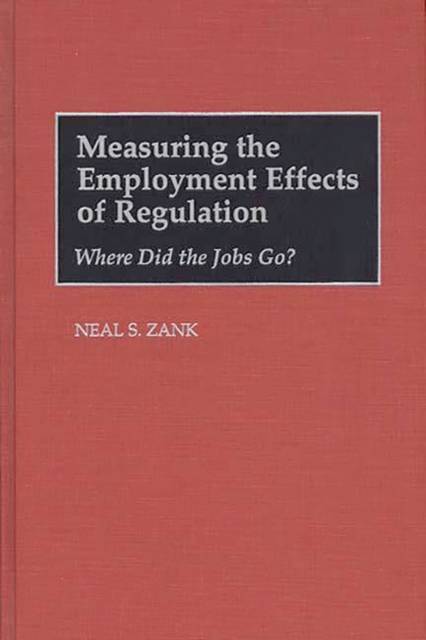
Measuring the Employment Effects of Regulation
Where Did the Jobs Go?
Neal S Zank
Hardcover | Engels
€ 135,95
+ 271 punten
Omschrijving
An increasing amount of attention has been focused on the employment effect of governmental regulation. Controversy over the implementation and impacts of governmental rules are now central to current public policy debates relating to employment and labor markets. A new policy framework for regulation is needed to make the regulatory decision-making process more responsive to the requirements for economic growth and to the employment effects of regulation. The President and Congress need to provide effective oversight of the process, from the perspective of both a single regulation and a government-wide approach to regulatory planning. Regulatory agencies need to use state-of-the-art analytical tools so that they can better determine the employment effects of their regulatory actions. This book presents a common-sense, albeit highly sophisticated and technical, approach to improving the technical soundness, credibility, and transparency of the regulatory decision-making process.
Specificaties
Betrokkenen
- Auteur(s):
- Uitgeverij:
Inhoud
- Aantal bladzijden:
- 160
- Taal:
- Engels
Eigenschappen
- Productcode (EAN):
- 9781567200706
- Verschijningsdatum:
- 23/08/1996
- Uitvoering:
- Hardcover
- Formaat:
- Genaaid
- Afmetingen:
- 152 mm x 229 mm
- Gewicht:
- 399 g


Alleen bij Standaard Boekhandel
+ 271 punten op je klantenkaart van Standaard Boekhandel
Cadeau

AANGERADEN


Beoordelingen
We publiceren alleen reviews die voldoen aan de voorwaarden voor reviews. Bekijk onze voorwaarden voor reviews.