


- Afhalen na 1 uur in een winkel met voorraad
- Gratis thuislevering in België vanaf € 30
- Ruim aanbod met 7 miljoen producten
- Afhalen na 1 uur in een winkel met voorraad
- Gratis thuislevering in België vanaf € 30
- Ruim aanbod met 7 miljoen producten





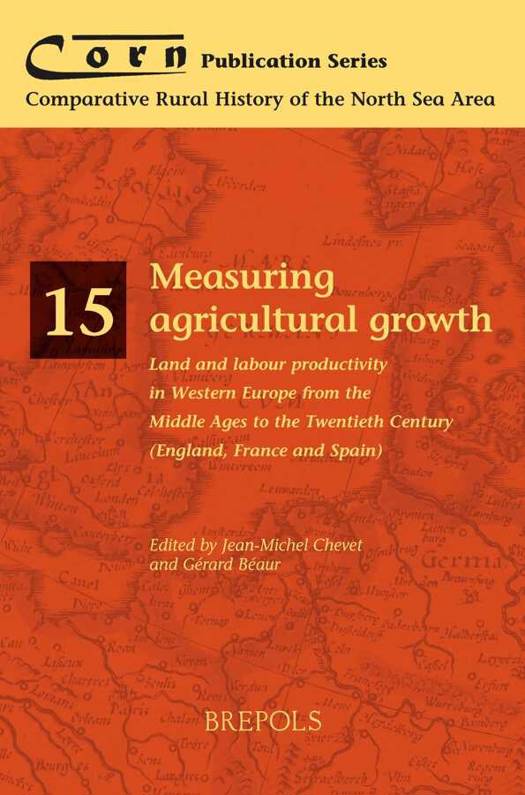
Measuring Agricultural Growth
Land and Labour Productivity in Western Europe from the Middle Ages to the Twentieth Century (England, France and Spain)
Gérard Béaur
€ 90,10
+ 180 punten
Omschrijving
This work takes a new look at the question of agricultural production and productivity and reopens the issue of agricultural growth and the questions that still surround its extraordinary impact on European societies. The nine contributions making up the volume set out another approach to this unprecedented shift, written from a new angle with new methods and a new way of associating micro and macro analyses. These chapters also make a break with the illusion of a single and dominant English or Anglo-Dutch model, and take a critical look against preconceptions that consist of interpreting everything in terms of advances or delays, and of ignoring the context behind the economic decisions made by producers. This collection makes it possible to get away from the eternal confrontation of French and English models, and to change the picture by careful consideration of another country with its own very specific natural and institutional conditions: Spain. It sets out to analyse some of the paths taken by farmers to overcome the constraints under which they operated, using historical experience and statistical analysis, without preconceived ideas. These papers do not hesitate to cross traditional chronological boundaries and look at different scales of production, at different times and in different places. They make incursions into a subject that is still crucial to present-day society, at a moment when the future of the food supply on much of the planet is as urgent and acute as ever.
Specificaties
Betrokkenen
- Auteur(s):
- Uitgeverij:
Inhoud
- Aantal bladzijden:
- 191
- Taal:
- Engels
- Reeks:
- Reeksnummer:
- nr. 15
Eigenschappen
- Productcode (EAN):
- 9782503519869
- Verschijningsdatum:
- 17/12/2014
- Uitvoering:
- Paperback
- Formaat:
- Trade paperback (VS)
- Afmetingen:
- 152 mm x 231 mm
- Gewicht:
- 453 g


Alleen bij Standaard Boekhandel
+ 180 punten op je klantenkaart van Standaard Boekhandel
Cadeau

AANGERADEN


Beoordelingen
We publiceren alleen reviews die voldoen aan de voorwaarden voor reviews. Bekijk onze voorwaarden voor reviews.