


- Afhalen na 1 uur in een winkel met voorraad
- Gratis thuislevering in België vanaf € 30
- Ruim aanbod met 7 miljoen producten
- Afhalen na 1 uur in een winkel met voorraad
- Gratis thuislevering in België vanaf € 30
- Ruim aanbod met 7 miljoen producten





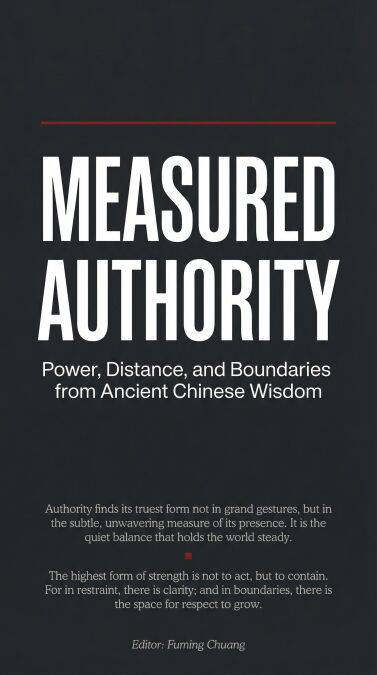
Measured Authority:Power, Distance, and Boundaries from Ancient Chinese Wisdom E-BOOK
Easter wisdom for modern management, #1
Fuming Chuang
€ 5,99
+ 5 punten
Omschrijving
Measured Authority is a modern reinterpretation of Su Shu, an ancient Chinese text traditionally attributed to Tang Dynasty chancellor Li Yifu.
Despite its historical association with power and governance, Su Shu is not a manual of manipulation or domination. It is a work of structural observation—one that examines how authority, proximity, emotion, and responsibility interact within human relationships.
This book begins with a question many modern readers quietly carry:
Why do we feel increasingly exhausted in relationships, work, and leadership roles—even when we are competent, kind, and cooperative?
The answer offered here is not emotional intelligence, communication skills, or personal branding.
It is measure.
Across organizations and personal relationships, authority does not collapse because people become unkind or incompetent. It collapses because boundaries dissolve. Distance disappears. Roles blur. Emotion replaces structure.
Measured Authority explores this collapse with clarity and restraint.
Drawing from Su Shu, the book shows how:
Authority weakens when leaders replace structure with emotion Goodwill becomes a liability without boundaries Excessive availability erodes respect Responsibility quietly shifts downward to the most reliable person Closeness, when misused, becomes a source of instabilityRather than focusing on personalities or moral judgments, this book examines positions, roles, and structural dynamics.
Each chapter translates classical principles into modern contexts:
Leadership and management Workplace politics Collaboration and partnership Personal boundaries Emotional labor and exhaustionConcrete scenario simulations and action guides demonstrate how to:
Say no without damaging relationships Maintain authority without force Create distance without hostility Exit roles and relationships cleanly Protect energy without guiltThe book does not teach readers how to control others.
It teaches how to remain intact.
At its core, Measured Authority argues that stability does not come from closeness, transparency, or constant explanation. It comes from knowing where to stand—and refusing to abandon that position.
In a culture that rewards speed, intimacy, and constant engagement, this book offers a quieter, more demanding discipline:
Stability begins with measure.
Specificaties
Betrokkenen
- Auteur(s):
- Uitgeverij:
Inhoud
- Taal:
- Engels
- Reeks:
Eigenschappen
- Productcode (EAN):
- 9798233806506
- Verschijningsdatum:
- 22/01/2026
- Uitvoering:
- E-book
- Formaat:
- ePub


Alleen bij Standaard Boekhandel
+ 5 punten op je klantenkaart van Standaard Boekhandel
Cadeau

AANGERADEN


Beoordelingen
We publiceren alleen reviews die voldoen aan de voorwaarden voor reviews. Bekijk onze voorwaarden voor reviews.