


- Afhalen na 1 uur in een winkel met voorraad
- Gratis thuislevering in België vanaf € 30
- Ruim aanbod met 7 miljoen producten
- Afhalen na 1 uur in een winkel met voorraad
- Gratis thuislevering in België vanaf € 30
- Ruim aanbod met 7 miljoen producten





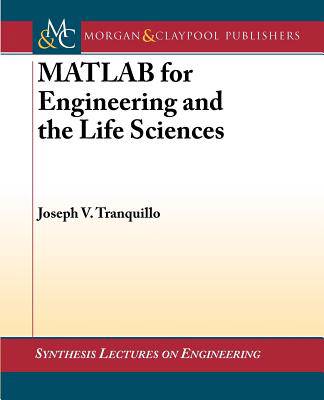
MATLAB for Engineering and the Life Sciences
Joseph V Tranquillo
€ 50,45
+ 100 punten
Omschrijving
In recent years, the life sciences have embraced simulation as an important tool in biomedical research. Engineers are also using simulation as a powerful step in the design process. In both arenas, Matlab has become the gold standard. It is easy to learn, flexible, and has a large and growing userbase. MATLAB for Engineering and the Life Sciences is a self-guided tour of the basic functionality of MATLAB along with the functions that are most commonly used in biomedical engineering and other life sciences. Although the text is written for undergraduates, graduate students and academics, those in industry may also find value in learning MATLAB through biologically inspired examples. For instructors, the book is intended to take the emphasis off of learning syntax so that the course can focus more on algorithmic thinking. Although it is not assumed that the reader has taken differential equations or a linear algebra class, there are short introductions to many of these concepts. Following a short history of computing, the MATLAB environment is introduced. Next, vectors and matrices are discussed, followed by matrix-vector operations. The core programming elements of MATLAB are introduced in three successive chapters on scripts, loops, and conditional logic. The last three chapters outline how to manage the input and output of data, create professional quality graphics and find and use Matlab toolboxes. Throughout, biomedical examples are used to illustrate MATLAB's capabilities. Table of Contents: Introduction / Matlab Programming Environment / Vectors / Matrices / Matrix -- Vector Operations / Scripts and Functions / Loops / Conditional Logic / Data In, Data Out / Graphics / Toolboxes
Specificaties
Betrokkenen
- Auteur(s):
- Uitgeverij:
Inhoud
- Aantal bladzijden:
- 121
- Taal:
- Engels
- Reeks:
Eigenschappen
- Productcode (EAN):
- 9781608457106
- Verschijningsdatum:
- 1/09/2011
- Uitvoering:
- Paperback
- Formaat:
- Trade paperback (VS)
- Afmetingen:
- 190 mm x 235 mm
- Gewicht:
- 244 g



Alleen bij Standaard Boekhandel
+ 100 punten op je klantenkaart van Standaard Boekhandel
Cadeau

AANGERADEN


Beoordelingen
We publiceren alleen reviews die voldoen aan de voorwaarden voor reviews. Bekijk onze voorwaarden voor reviews.