


- Afhalen na 1 uur in een winkel met voorraad
- Gratis thuislevering in België vanaf € 30
- Ruim aanbod met 7 miljoen producten
- Afhalen na 1 uur in een winkel met voorraad
- Gratis thuislevering in België vanaf € 30
- Ruim aanbod met 7 miljoen producten





Omschrijving
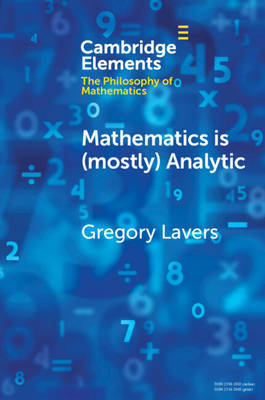
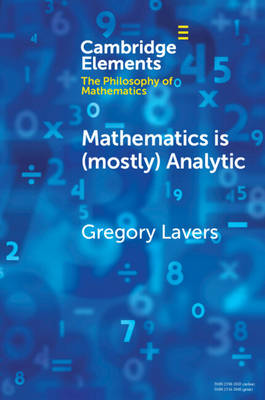
This Element outlines and defends an account of analyticity according to which mathematics is, for the most part, analytic. The author begins by looking at Quine's arguments against the concepts of analyticity. He shows how Quine's position on analyticity is related to his view on explication and shows how this suggests a way of defining analyticity that would meet Quine's own standards for explication. The author then looks at Boghossian and his distinction between epistemic and metaphysical accounts of analyticity. Here he argues that there is a straightforward way of eliminating the confusion Boghossian sees with what he calls metaphysical accounts. The author demonstrates that the epistemic dimension of his epistemic account is almost entirely superfluous. The author then discusses how analyticity is related to truth, necessity, and questions of ontology. Finally, he discusses the vagueness of analyticity and also the relation of analyticity to the axiomatic method in mathematics.
Specificaties
Betrokkenen
- Auteur(s):
- Uitgeverij:
Inhoud
- Aantal bladzijden:
- 70
- Taal:
- Engels
- Reeks:
Eigenschappen
- Productcode (EAN):
- 9781009111119
- Verschijningsdatum:
- 30/01/2025
- Uitvoering:
- Paperback
- Formaat:
- Trade paperback (VS)
- Afmetingen:
- 152 mm x 229 mm
- Gewicht:
- 104 g


Alleen bij Standaard Boekhandel
+ 72 punten op je klantenkaart van Standaard Boekhandel
Cadeau

AANGERADEN


Beoordelingen
We publiceren alleen reviews die voldoen aan de voorwaarden voor reviews. Bekijk onze voorwaarden voor reviews.