


- Afhalen na 1 uur in een winkel met voorraad
- Gratis thuislevering in België vanaf € 30
- Ruim aanbod met 7 miljoen producten
- Afhalen na 1 uur in een winkel met voorraad
- Gratis thuislevering in België vanaf € 30
- Ruim aanbod met 7 miljoen producten





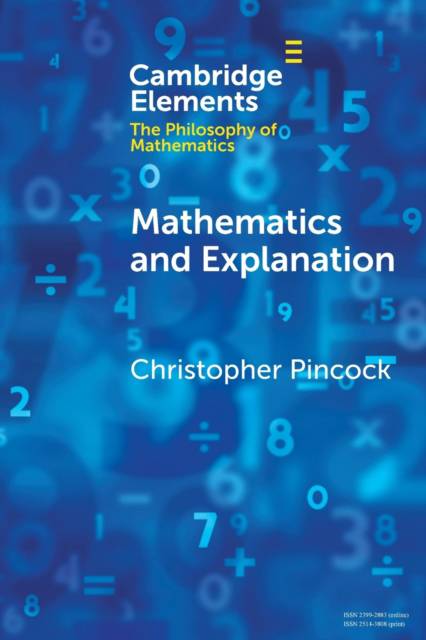
Mathematics and Explanation
Christopher Pincock
€ 36,45
+ 72 punten
Omschrijving
This Element answers four questions. Can any traditional theory of scientific explanation make sense of the place of mathematics in explanation? If traditional monist theories are inadequate, is there some way to develop a more flexible, but still monist, approach that will clarify how mathematics can help to explain? What sort of pluralism about explanation is best equipped to clarify how mathematics can help to explain in science and in mathematics itself? Finally, how can the mathematical elements of an explanation be integrated into the physical world? Some of the evidence for a novel scientific posit may be traced to the explanatory power that this posit would afford, were it to exist. Can a similar kind of explanatory evidence be provided for the existence of mathematical objects, and if not, why not?
Specificaties
Betrokkenen
- Auteur(s):
- Uitgeverij:
Inhoud
- Aantal bladzijden:
- 88
- Taal:
- Engels
- Reeks:
Eigenschappen
- Productcode (EAN):
- 9781009017664
- Verschijningsdatum:
- 25/05/2023
- Uitvoering:
- Paperback
- Formaat:
- Trade paperback (VS)
- Afmetingen:
- 152 mm x 229 mm
- Gewicht:
- 127 g


Alleen bij Standaard Boekhandel
+ 72 punten op je klantenkaart van Standaard Boekhandel
Cadeau

AANGERADEN


Beoordelingen
We publiceren alleen reviews die voldoen aan de voorwaarden voor reviews. Bekijk onze voorwaarden voor reviews.