


- Afhalen na 1 uur in een winkel met voorraad
- Gratis thuislevering in België vanaf € 30
- Ruim aanbod met 7 miljoen producten
- Afhalen na 1 uur in een winkel met voorraad
- Gratis thuislevering in België vanaf € 30
- Ruim aanbod met 7 miljoen producten




Omschrijving
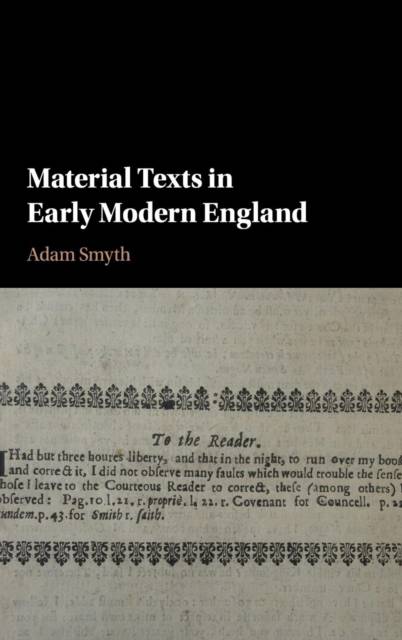
What was a book in early modern England? By combining book history, bibliography and literary criticism, Material Texts in Early Modern England explores how sixteenth- and seventeenth-century books were stranger, richer things than scholars have imagined. Adam Smyth examines important aspects of bibliographical culture which have been under-examined by critics: the cutting up of books as a form of careful reading; book destruction and its relation to canon formation; the prevalence of printed errors and the literary richness of mistakes; and the recycling of older texts in the bodies of new books, as printed waste. How did authors, including Herbert, Jonson, Milton, Nashe and Cavendish, respond to this sense of the book as patched, transient, flawed, and palimpsestic? Material Texts in Early Modern England recovers these traits and practices, and so crucially revises our sense of what a book was, and what a book might be.
Specificaties
Betrokkenen
- Auteur(s):
- Uitgeverij:
Inhoud
- Aantal bladzijden:
- 220
- Taal:
- Engels
Eigenschappen
- Productcode (EAN):
- 9781108421324
- Verschijningsdatum:
- 11/01/2018
- Uitvoering:
- Hardcover
- Formaat:
- Genaaid
- Afmetingen:
- 156 mm x 236 mm
- Gewicht:
- 494 g


Alleen bij Standaard Boekhandel
+ 366 punten op je klantenkaart van Standaard Boekhandel
AANGERADEN


Beoordelingen
We publiceren alleen reviews die voldoen aan de voorwaarden voor reviews. Bekijk onze voorwaarden voor reviews.