


- Afhalen na 1 uur in een winkel met voorraad
- Gratis thuislevering in België vanaf € 30
- Ruim aanbod met 7 miljoen producten
- Afhalen na 1 uur in een winkel met voorraad
- Gratis thuislevering in België vanaf € 30
- Ruim aanbod met 7 miljoen producten





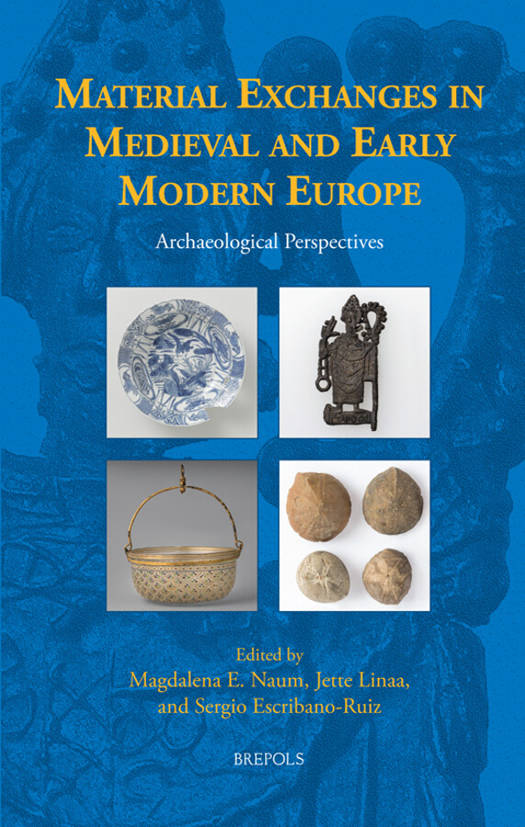
Material Exchanges in Medieval and Early Modern Europe
Archaeological Perspectives
Magdalena E. Naum
€ 79,50
+ 159 punten
Omschrijving
The study of the movement of 'things' - the exchange of objects as gifts or through trade, the itineraries that they followed when on the move, and their changing importance from location to location - can offer unique insights into our understanding of past societies; and archaeology plays a vital role in allowing such movements to be traced. Nonetheless, the circulation of objects across time, and between peoples and places, has long been neglected as a field of research in its own right. This volume aims to address this gap in scholarship by drawing on recent archaeological research to provide a detailed study of the moment of objects across Europe in the late medieval and early modern period. The contributions gathered here trace the interactions between peoples, ideas, and objects in order to explore the impact of movement both on the material things themselves, and on the people who manufactured, exchanged, or used such goods. The volume draws on a wide range of archaeological evidence to explore subjects as varied as production and transport, modes of trade, the connections between trade and religion, and the emotional connections between things and people. Together, they offer a pioneering approach to our understanding of objects and their movement in the past.
Specificaties
Betrokkenen
- Auteur(s):
- Uitgeverij:
Inhoud
- Aantal bladzijden:
- 264
- Taal:
- Engels
- Reeks:
- Reeksnummer:
- nr. 9
Eigenschappen
- Productcode (EAN):
- 9782503593999
- Verschijningsdatum:
- 9/12/2021
- Uitvoering:
- Hardcover
- Formaat:
- Genaaid
- Gewicht:
- 1460 g


Alleen bij Standaard Boekhandel
+ 159 punten op je klantenkaart van Standaard Boekhandel
Cadeau

AANGERADEN


Beoordelingen
We publiceren alleen reviews die voldoen aan de voorwaarden voor reviews. Bekijk onze voorwaarden voor reviews.