


- Afhalen na 1 uur in een winkel met voorraad
- Gratis thuislevering in België vanaf € 30
- Ruim aanbod met 7 miljoen producten
- Afhalen na 1 uur in een winkel met voorraad
- Gratis thuislevering in België vanaf € 30
- Ruim aanbod met 7 miljoen producten





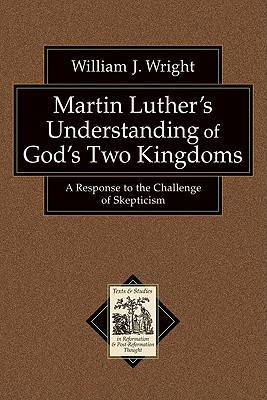
Martin Luther's Understanding of God's Two Kingdoms
A Response to the Challenge of Skepticism
William J Wright
€ 47,45
+ 94 punten
Omschrijving
The concept of God's two kingdoms was foundational to Luther and subsequent Lutheran theology. Since the middle of the nineteenth century, that concept has been understood primarily as a political concept. But is a political reading of the two kingdoms a perversion of Luther's teaching?
Leading Reformation scholar William Wright contends that those who read Luther politically and see in Luther a compartmentalized approach to Christian life are misreading the Reformer. Wright reassesses the original breadth of Luther's theology of the two kingdoms and the cultural contexts from which it emerged. He argues that Luther's two-kingdom worldview was not a justification for living irresponsibly on planet earth.
Leading Reformation scholar William Wright contends that those who read Luther politically and see in Luther a compartmentalized approach to Christian life are misreading the Reformer. Wright reassesses the original breadth of Luther's theology of the two kingdoms and the cultural contexts from which it emerged. He argues that Luther's two-kingdom worldview was not a justification for living irresponsibly on planet earth.
Specificaties
Betrokkenen
- Auteur(s):
- Uitgeverij:
Inhoud
- Aantal bladzijden:
- 208
- Taal:
- Engels
- Reeks:
Eigenschappen
- Productcode (EAN):
- 9780801038846
- Verschijningsdatum:
- 1/01/2010
- Uitvoering:
- Paperback
- Formaat:
- Trade paperback (VS)
- Afmetingen:
- 176 mm x 229 mm
- Gewicht:
- 331 g


Alleen bij Standaard Boekhandel
+ 94 punten op je klantenkaart van Standaard Boekhandel
Cadeau

AANGERADEN


Beoordelingen
We publiceren alleen reviews die voldoen aan de voorwaarden voor reviews. Bekijk onze voorwaarden voor reviews.