



Je cadeautjes zeker op tijd in huis hebben voor de feestdagen? Kom langs in onze winkels en vind het perfecte geschenk!
- Afhalen na 1 uur in een winkel met voorraad
- Gratis thuislevering in België vanaf € 30
- Ruim aanbod met 7 miljoen producten
Je cadeautjes zeker op tijd in huis hebben voor de feestdagen? Kom langs in onze winkels en vind het perfecte geschenk!
- Afhalen na 1 uur in een winkel met voorraad
- Gratis thuislevering in België vanaf € 30
- Ruim aanbod met 7 miljoen producten





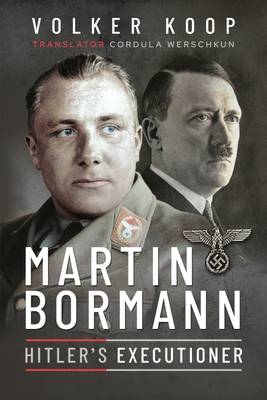
Omschrijving
Born on 17 June 1900, Martin Ludwig Bormann became one of the most powerful and most feared men in the Third Reich. An obsessive bureaucrat, it was Bormann who helped steer Hitler's apparatus of terror so effectively that he became the clandestine ruler of Nazi Germany.
After joining the Nazi Party in 1927 Bormann rose through its ranks. Indeed, by July 1933 Bormann had manoeuvered himself into the position where he became the Chief of Cabinet in the Office of the Deputy Führer, Rudolf Hess. In this role Bormann gradually consolidated his power base, so that when Hess carried out his infamous flight to the United Kingdom in 1941, Bormann stepped into his shoes.
As the head of the Party Chancellery, Bormann duly took control of the Nazi Party. By the end of 1942, he was in effect Hitler's deputy and his closest collaborator. With the Führer increasingly preoccupied with military matters, Hitler came to rely more and more on Bormann to handle Germany's domestic affairs. On 12 April 1943, Bormann was appointed Personal Secretary to the Führer.
Feared by ministers, Gauleiters, civil servants, judges and generals alike, Bormann identified strongly with Hitler's ideas on racial politics, destruction of the Jews and forced labour and made himself indispensable as the Führer's executioner. Cold as ice, he decided the fate of millions of people.
In January 1945, with the Third Reich collapsing, Bormann returned to the Führerbunker with Hitler. Following Hitler's suicide on 30 April, Bormann was named as Party Minister, thus officially confirming his rise to the top of the Party. Late the following day he fled from the bunker in an attempt to escape the encircling Red Army; his fate remaining a mystery for many years. In October 1946 he was found guilty in absentia by the International Military Tribunal at Nuremberg and sentenced to death.
Drawing heavily on recently declassified documents and files, the historian and journalist Volker Koop reveals the full story of the most faithful member of Hitler's inner circle, an individual who, whilst little known to the German people, became the second most powerful man in the Third Reich.
After joining the Nazi Party in 1927 Bormann rose through its ranks. Indeed, by July 1933 Bormann had manoeuvered himself into the position where he became the Chief of Cabinet in the Office of the Deputy Führer, Rudolf Hess. In this role Bormann gradually consolidated his power base, so that when Hess carried out his infamous flight to the United Kingdom in 1941, Bormann stepped into his shoes.
As the head of the Party Chancellery, Bormann duly took control of the Nazi Party. By the end of 1942, he was in effect Hitler's deputy and his closest collaborator. With the Führer increasingly preoccupied with military matters, Hitler came to rely more and more on Bormann to handle Germany's domestic affairs. On 12 April 1943, Bormann was appointed Personal Secretary to the Führer.
Feared by ministers, Gauleiters, civil servants, judges and generals alike, Bormann identified strongly with Hitler's ideas on racial politics, destruction of the Jews and forced labour and made himself indispensable as the Führer's executioner. Cold as ice, he decided the fate of millions of people.
In January 1945, with the Third Reich collapsing, Bormann returned to the Führerbunker with Hitler. Following Hitler's suicide on 30 April, Bormann was named as Party Minister, thus officially confirming his rise to the top of the Party. Late the following day he fled from the bunker in an attempt to escape the encircling Red Army; his fate remaining a mystery for many years. In October 1946 he was found guilty in absentia by the International Military Tribunal at Nuremberg and sentenced to death.
Drawing heavily on recently declassified documents and files, the historian and journalist Volker Koop reveals the full story of the most faithful member of Hitler's inner circle, an individual who, whilst little known to the German people, became the second most powerful man in the Third Reich.
Specificaties
Betrokkenen
- Auteur(s):
- Uitgeverij:
Inhoud
- Aantal bladzijden:
- 248
- Taal:
- Engels
Eigenschappen
- Productcode (EAN):
- 9781526797513
- Verschijningsdatum:
- 30/01/2026
- Uitvoering:
- Paperback
- Formaat:
- Trade paperback (VS)
- Afmetingen:
- 155 mm x 231 mm


Alleen bij Standaard Boekhandel
+ 44 punten op je klantenkaart van Standaard Boekhandel
CADEAU


Beoordelingen
We publiceren alleen reviews die voldoen aan de voorwaarden voor reviews. Bekijk onze voorwaarden voor reviews.