


- Afhalen na 1 uur in een winkel met voorraad
- Gratis thuislevering in België vanaf € 30
- Ruim aanbod met 7 miljoen producten
- Afhalen na 1 uur in een winkel met voorraad
- Gratis thuislevering in België vanaf € 30
- Ruim aanbod met 7 miljoen producten





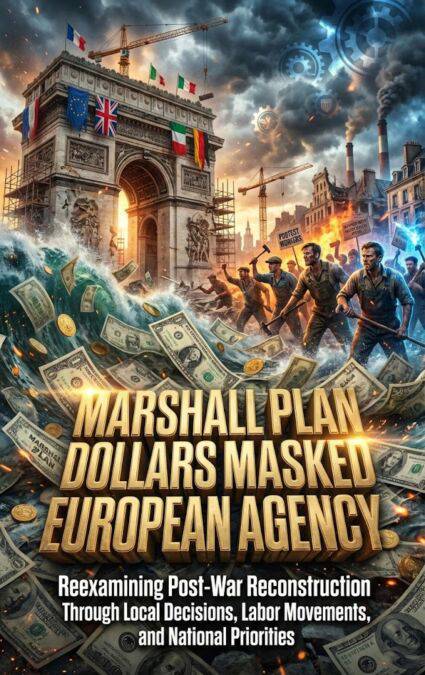
Marshall Plan Dollars Masked European Agency E-BOOK
Reexamining Post-War Reconstruction Through Local Decisions, Labor Movements, and National Priorities
Sarah Whitfield
E-book | Engels
€ 8,99
+ 8 punten
Omschrijving
Post-war Europe is remembered through American aid—the Marshall Plan rebuilding a devastated continent. Yet this narrative of transatlantic generosity overlooks the reality: European governments made strategic choices about which industries to rebuild, labor unions negotiated welfare systems that defined modern social democracy, and local communities organized reconstruction before foreign aid arrived. American dollars mattered, but they flowed into frameworks Europeans themselves designed.
This book traces reconstruction through national planning documents, trade union records, parliamentary debates, and municipal archives. It examines how French technocrats prioritized heavy industry, how British Labour built the NHS despite austerity, and how West German unions secured co-determination rights in exchange for wage restraint. The focus extends beyond government policy to include the displaced persons rebuilding homes, the women entering industrial workforces, and the colonial subjects whose resources subsidized metropolitan recovery.
By analyzing reconstruction as a process of contested choices rather than inevitable progress, this work reveals how post-war Europe emerged from specific political decisions embedded in power relationships. It explores the gap between reconstruction mythology and documented reality—asking whose vision of Europe actually prevailed, and at what cost to whom.
This book traces reconstruction through national planning documents, trade union records, parliamentary debates, and municipal archives. It examines how French technocrats prioritized heavy industry, how British Labour built the NHS despite austerity, and how West German unions secured co-determination rights in exchange for wage restraint. The focus extends beyond government policy to include the displaced persons rebuilding homes, the women entering industrial workforces, and the colonial subjects whose resources subsidized metropolitan recovery.
By analyzing reconstruction as a process of contested choices rather than inevitable progress, this work reveals how post-war Europe emerged from specific political decisions embedded in power relationships. It explores the gap between reconstruction mythology and documented reality—asking whose vision of Europe actually prevailed, and at what cost to whom.
Specificaties
Betrokkenen
- Auteur(s):
- Uitgeverij:
Inhoud
- Aantal bladzijden:
- 243
- Taal:
- Engels
Eigenschappen
- Productcode (EAN):
- 9783565207794
- Verschijningsdatum:
- 28/01/2026
- Uitvoering:
- E-book
- Formaat:
- ePub



Alleen bij Standaard Boekhandel
+ 8 punten op je klantenkaart van Standaard Boekhandel
AANGERADEN


Beoordelingen
We publiceren alleen reviews die voldoen aan de voorwaarden voor reviews. Bekijk onze voorwaarden voor reviews.