



Bedankt voor het vertrouwen het afgelopen jaar! Om jou te bedanken bieden we GRATIS verzending (in België) aan op alles gedurende de hele maand januari.
- Afhalen na 1 uur in een winkel met voorraad
- In januari gratis thuislevering in België
- Ruim aanbod met 7 miljoen producten
Bedankt voor het vertrouwen het afgelopen jaar! Om jou te bedanken bieden we GRATIS verzending (in België) aan op alles gedurende de hele maand januari.
- Afhalen na 1 uur in een winkel met voorraad
- In januari gratis thuislevering in België
- Ruim aanbod met 7 miljoen producten





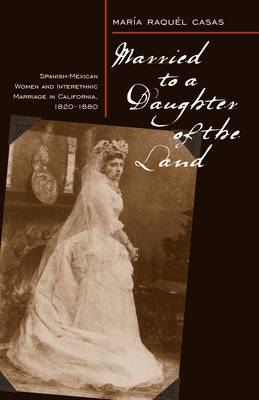
Married to a Daughter of the Land
Spanish-Mexican Women and Interethnic Marriage in California, 1820-80
Maria Raquel Casas
Paperback | Engels
€ 41,45
+ 82 punten
Omschrijving
The surprising truth about intermarriage in 19th-Century California. Until recently, most studies of the colonial period of the American West have focused on the activities and agency of men. Now, historian María Raquél Casas examines the role of Spanish-Mexican women in the development of California. She finds that, far from being pawns in a male-dominated society, Californianas of all classes were often active and determined creators of their own destinies, finding ways to choose their mates, to leave unsatisfactory marriages, and to maintain themselves economically. Using a wide range of sources in English and Spanish, Casas unveils a picture of women's lives in these critical decades of California's history. She shows how many Spanish-Mexican women negotiated the precarious boundaries of gender and race to choose Euro-American husbands, and what this intermarriage meant to the individuals involved and to the larger multiracial society evolving from California's rich Hispanic and Indian past. Casas's discussion ranges from California's burgeoning economy to the intimacies of private households and ethnically mixed families. Here we discover the actions of real women of all classes as they shaped their own identities. Married to a Daughter of the Land is a significant and fascinating contribution to the history of women in the American West and to our understanding of the complex role of gender, race, and class in the Borderlands of the Southwest.
Specificaties
Betrokkenen
- Auteur(s):
- Uitgeverij:
Inhoud
- Aantal bladzijden:
- 280
- Taal:
- Engels
Eigenschappen
- Productcode (EAN):
- 9780874177787
- Verschijningsdatum:
- 1/03/2009
- Uitvoering:
- Paperback
- Formaat:
- Trade paperback (VS)
- Afmetingen:
- 152 mm x 229 mm
- Gewicht:
- 403 g


Alleen bij Standaard Boekhandel
+ 82 punten op je klantenkaart van Standaard Boekhandel
SOLDEN


Beoordelingen
We publiceren alleen reviews die voldoen aan de voorwaarden voor reviews. Bekijk onze voorwaarden voor reviews.