


- Afhalen na 1 uur in een winkel met voorraad
- Gratis thuislevering in België vanaf € 30
- Ruim aanbod met 7 miljoen producten
- Afhalen na 1 uur in een winkel met voorraad
- Gratis thuislevering in België vanaf € 30
- Ruim aanbod met 7 miljoen producten




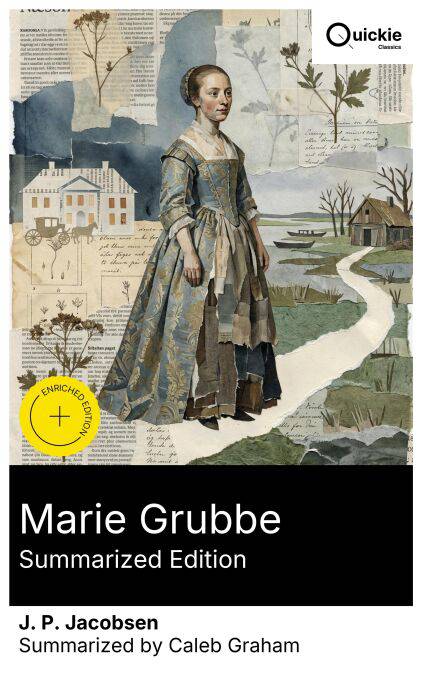
Marie Grubbe (Summarized Edition) E-BOOK
Enriched edition. Naturalistic tale of female desire and identity among Danish nobility in 19th-century Denmark, confronting a judgmental society.
J. P. Jacobsen
E-book | Engels
€ 1,99
+ 1 punten
Omschrijving
"Marie Grubbe" (1876) recounts the fate of a seventeenth‑century Danish noblewoman who abandons privilege for desire, descending from court pageantry to taverns, ferries, and rural obscurity. Jacobsen fuses archival realism with sensuous, impressionistic prose, using shifting focalization to chart Marie's will, defiance, and uneasy accommodation to necessity. Painterly scenes—salt marshes, candlelit chambers, winter roads—serve a cool naturalism that tests how class, gender, and temperament shape choice, making the historical novel an anti‑romance of female agency in the early modern order. J. P. Jacobsen, a botanist and pioneering Danish naturalist (1847–1885), brought empirical habits and aesthetic refinement to narrative. A translator and advocate of Darwin, and a participant in Georg Brandes's Modern Breakthrough, he sifted letters and legal records about the real Marie Grubbe, then reimagined them with psychological nuance. His scientific attentiveness to environment and heredity meets a lyrical sensibility, yielding a study of desire as both biological impulse and historically mediated choice. Recommended to readers of Flaubert and Ibsen, this novel joins the Modern Breakthrough's canon with rare grace: exacting in history, ravishing in style, and bracing in its claim that dignity arises from lucid desire, not inherited rank.
Quickie Classics summarizes timeless works with precision, preserving the author's voice and keeping the prose clear, fast, and readable—distilled, never diluted. Enriched Edition extras: Introduction · Synopsis · Historical Context · Brief Analysis · 4 Reflection Q&As · Editorial Footnotes.
Quickie Classics summarizes timeless works with precision, preserving the author's voice and keeping the prose clear, fast, and readable—distilled, never diluted. Enriched Edition extras: Introduction · Synopsis · Historical Context · Brief Analysis · 4 Reflection Q&As · Editorial Footnotes.
Specificaties
Betrokkenen
- Auteur(s):
- Vertaler(s):
- Uitgeverij:
Inhoud
- Aantal bladzijden:
- 111
- Taal:
- Engels
Eigenschappen
- Productcode (EAN):
- 8596547882909
- Verschijningsdatum:
- 9/01/2026
- Uitvoering:
- E-book
- Beveiligd met:
- Digital watermarking
- Formaat:
- ePub


Alleen bij Standaard Boekhandel
+ 1 punten op je klantenkaart van Standaard Boekhandel
AANGERADEN


Beoordelingen
We publiceren alleen reviews die voldoen aan de voorwaarden voor reviews. Bekijk onze voorwaarden voor reviews.